
7 steps-How Small Bloggers Can Compete With Big sites in AI Answers
Learning How Small Bloggers Can Compete With Big Websites in AI Answers is essential because giants like Forbes and HubSpot dominate search engines. But here is the good news…
Big websites like Forbes, HubSpot, Backlinko, and Neil Patel have large teams, huge budgets, and thousands of backlinks. Because of this, they often dominate AI answers on platforms like ChatGPT, Perplexity, and Gemini.
But here’s the good news. Small bloggers can still compete , and in many cases, even outperform big websites in AI search results.
AI doesn’t only care about brand size or authority. It values usefulness, clarity, originality, and trust. If you follow the right strategies, you can get your content cited in AI answers.
How Small Bloggers Can Compete With Big Websites in AI Answers: 7 Practical Ways
1. Niche Down Deeply (Go Hyper Specific)
2. Share Your Personal Experience and Real Insights
3. Create Citation-Worthy Content
4. Use Speed and Freshness to Your Advantage
5. Build Strong E-E-A-T Even as a Small Blogger
6. Make Your Content AI-Friendly in Structure
7. Target Questions That Big Websites Ignore
How Small Bloggers Can Compete With Big Websites in AI Answers: Detailed Steps
1. Niche Down Deeply (Go Hyper Specific)
Big websites usually write general articles. You can win by becoming extremely specific in your niche.
Example:
Instead of writing “How to Grow Your Blog”, write “How I Grew My Blog from 0 to 10,000 Visitors as a Solo Blogger.
The more specific your content is, the easier it is for AI to understand its relevance and cite it.
Action Tip: Pick a small sub-niche and try to become the best resource in that area.
2. Share Your Personal Experience and Real Insights
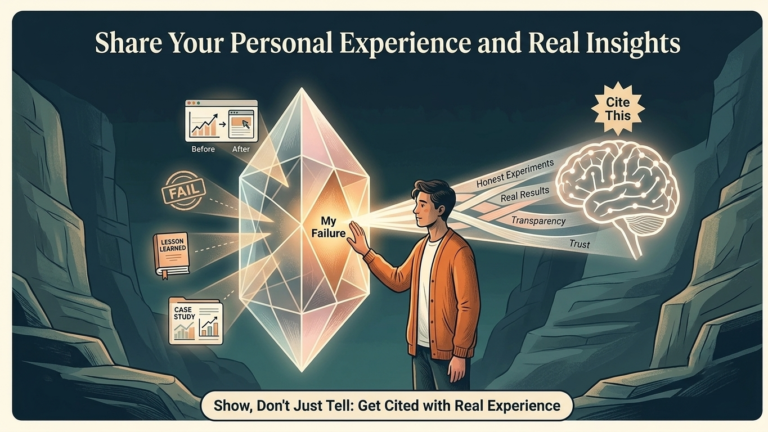
This is the biggest advantage small bloggers have.
Big sites often share generic advice. You can stand out by sharing:
- Your personal experiments
- Real results with screenshots
- Failures and lessons learned
- Honest case studies
AI now strongly favors content that shows real experience (the “Experience” part of E-E-A-T).
3. Create Citation-Worthy Content
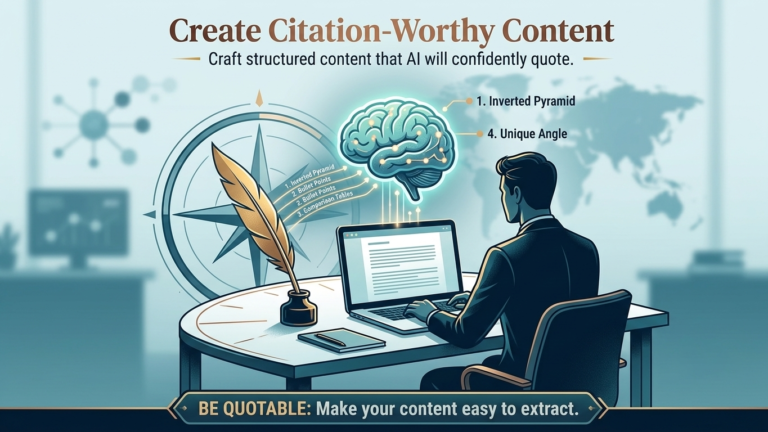
AI doesn’t just read content, it looks for content it can confidently quote.
To make your content citation-worthy:
- Answer the main question in the first few sentences (Inverted Pyramid style)
- Use clear bullet points and numbered lists
- Add comparison tables
- Include unique angles and fresh examples
If AI finds your content easy to understand and extract, it is more likely to cite it.
4. Use Speed and Freshness to Your Advantage
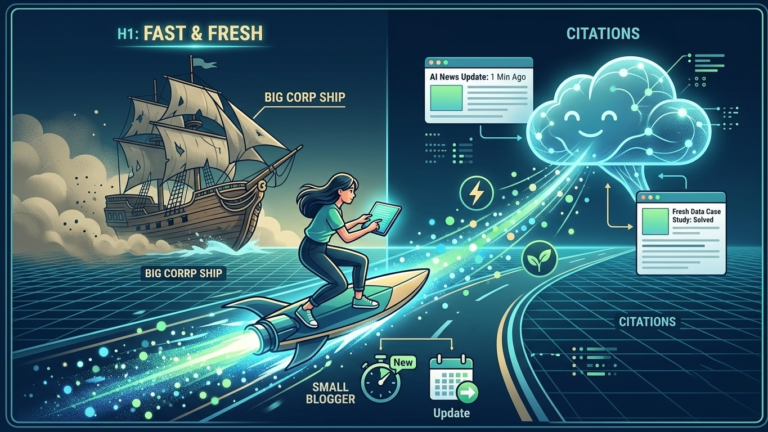
Big websites are often slow to update their old content. You can beat them by being fast and consistent.
How to do it:
- Publish quick articles on new AI updates and tools
- Regularly update your old posts with fresh information
- Add new statistics and examples
Always remember that Freshness plays a big role in AI search visibility.
5. Build Strong E-E-A-T Even as a Small Blogger
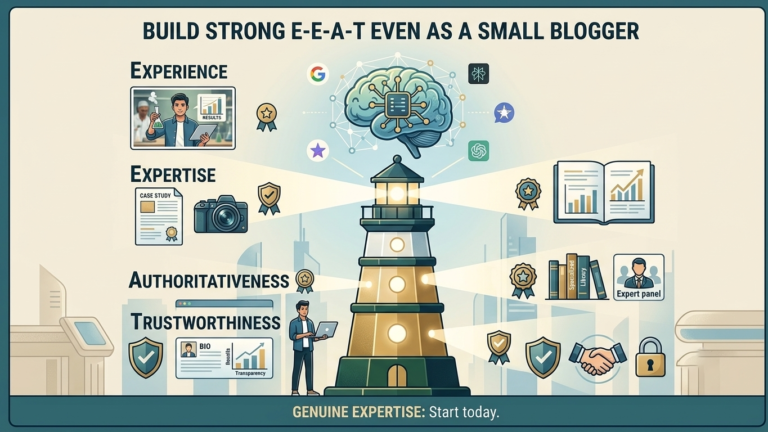
You don’t need a big brand name to build trust. You can do it by:
- Writing a detailed author bio with your photo and experience
- Showing proof of your results
- Citing reliable sources
- Being transparent and honest in your writing
AI systems respect genuine expertise, even from small bloggers.
6. Make Your Content AI-Friendly in Structure
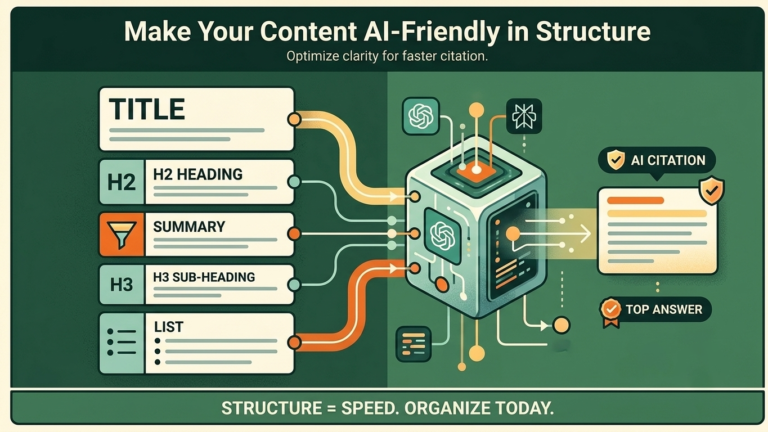
AI doesn’t read full articles like humans. It reads small “chunks” of content.
Best Practices:
- Keep paragraphs short (3–5 lines maximum)
- Use clear H2 and H3 headings
- Add bullet points and numbered lists
- Make every section complete on its own
This structure makes it much easier for AI to understand and use your content.
7. Target Questions That Big Websites Ignore
Big websites focus on high search volume topics. You should target long-tail, specific questions they usually overlook.
Examples:
- “How can a beginner blogger optimize for AI search”
- “Best free tools for small bloggers to improve AI visibility”
These questions have lower competition but very high user intent.
So I Would Like to Say
Many creators wonder How Small Bloggers Can Compete With Big Websites in AI Answers, and the secret lies in focusing on hyper-specific niches and real personal experience.
You don’t have to compete with big websites on their terms. Instead, create your own advantage through specificity, authenticity, and speed.
Small bloggers have something big brands often lack like real and personal experience. AI is getting smarter at recognizing this, and that’s where you can win.
Start Today:
Pick one of your old blog posts and optimize it using the strategies above. Then test it in Perplexity and ChatGPT to see the difference.
You can also share your personal experience with me.
Thank you.