
SEO Copywriting Guide From The #1 Ranking SEO Copywriter
SEO copywriting is the skill of writing content that ranks high in search results while persuading readers to take action. It combines clear persuasion with strategic keyword placement, proper structure, and genuine value for the reader.
This guide shares the exact approach used to create pages that consistently appear at the top of search results and convert visitors into customers.
What Makes SEO Copywriting Different
Regular copywriting focuses mainly on selling. SEO copywriting does both: it attracts the right audience through search engines and then moves that audience toward a desired action.
The best SEO copy feels natural to humans yet remains fully optimized for search algorithms.
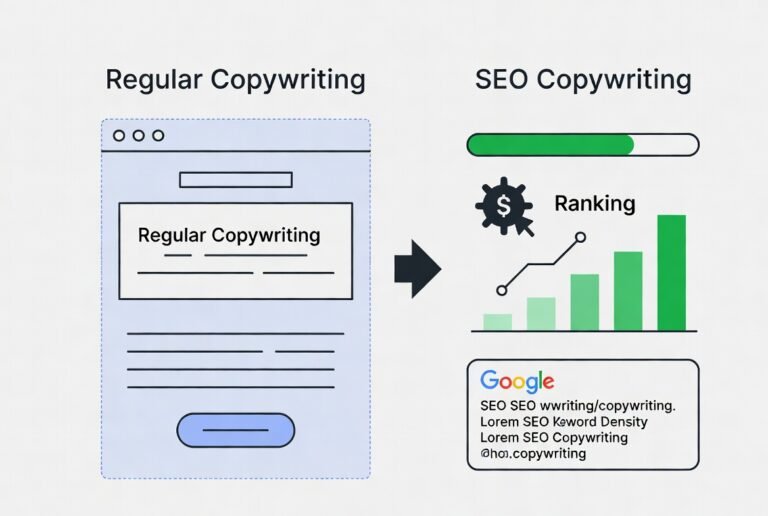
Key differences include:
- Intentional use of target keywords without forcing them
- Clear hierarchy with headings that match search queries
- Content depth that fully answers the reader’s question
- Fast-loading, mobile-friendly formatting
- Internal links that guide users deeper into the site
The Core Principles of High-Ranking SEO Copy
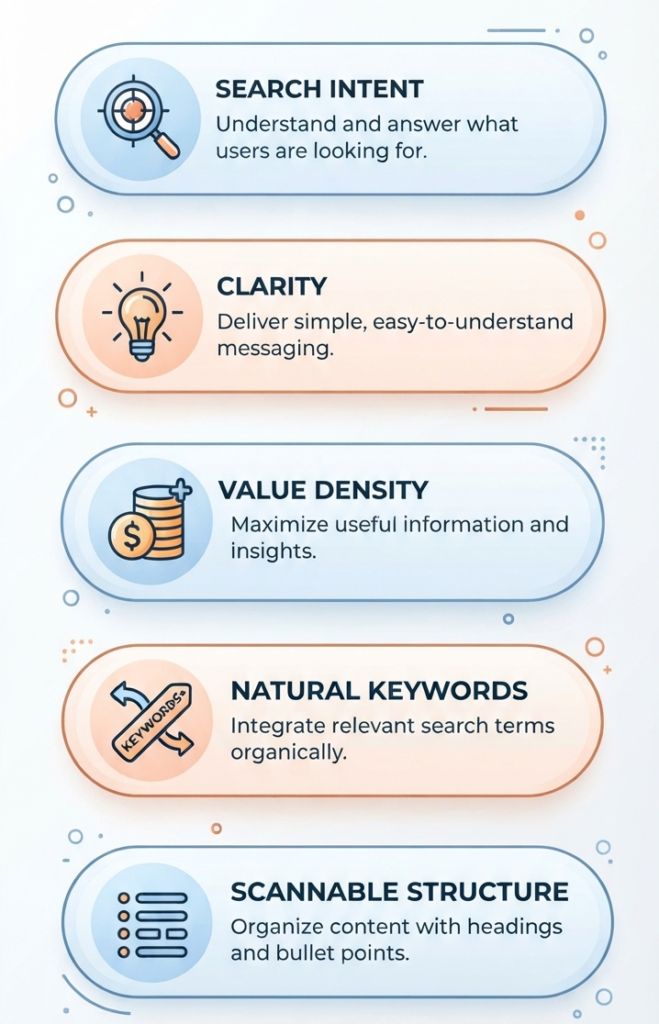
Successful SEO copy rests on five non-negotiable principles:
- Search Intent First Every piece must match what the searcher actually wants , information, comparison, or purchase.
- Clarity Over Cleverness Simple sentences outperform fancy language. Readers and algorithms both reward easy understanding.
- Value Density Every paragraph should teach, solve, or persuade. Empty words dilute ranking potential.
- Natural Keyword Integration Place primary and secondary keywords where they fit smoothly in titles, headings, and body text.
- Scannable Structure Use short paragraphs, bullet points, numbered lists, and descriptive subheadings so readers can absorb information quickly.
Step-by-Step Process to Write Ranking SEO Copy
Follow this sequence for consistent results:
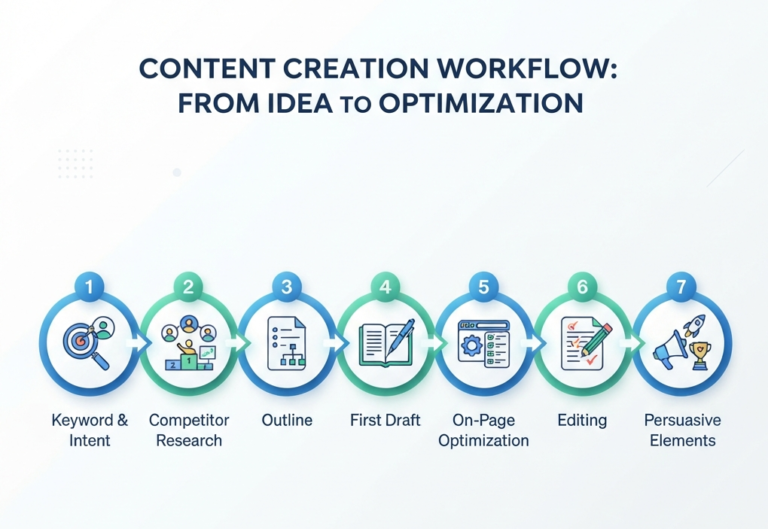
Step 1: Define the Target Keyword and Intent
Choose one primary keyword and identify whether the searcher wants information, a solution, or a product.
Secondary keywords support the main topic.
Step 2: Research the Competition
Examine the top-ranking pages. Note their word count, heading structure, questions they answer, and gaps they leave open.
Your content should cover the same ground more thoroughly and more clearly.
Step 3: Create a Detailed Outline
Build a logical flow using H2 and H3 headings.
Include the primary keyword in the main title and at least one secondary keyword in subheadings where it fits naturally.
Step 4: Write the First Draft for Humans
Focus on answering the reader’s questions completely.
Write in a conversational yet professional tone. Avoid stuffing keywords.
Step 5: Optimize On-Page Elements
| Element | Best Practice |
|---|---|
| Title Tag | Include primary keyword near the beginning |
| Meta Description | Summarize benefit + include keyword (under 160 characters) |
| URL | Short, readable, and keyword-focused |
| H1 | Match or closely reflect the title tag |
| H2 / H3 Headings | Use secondary keywords and question-style phrases |
| Image Alt Text | Describe the image and include a relevant keyword when natural |
| Internal Links | Link to related pages using descriptive anchor text |
Step 6: Edit for Flow and Readability
Cut unnecessary words. Break long sentences. Ensure every section adds new value.
Read the copy aloud to catch awkward phrasing.
Step 7: Add Persuasive Elements
Include clear calls to action, social proof where relevant, and benefit-driven language that encourages the next step.
Essential Techniques That Separate Average From Top-Ranking Copy
- Answer the main question in the first 100 words
- Use transition words to improve readability scores
- Cover related subtopics that searchers also care about
- Update content regularly with fresh data or examples
- Write unique introductions that avoid repeating the same phrases found on competing pages
- Balance keyword density so the primary term appears naturally (usually 0.5–1.5% of total words)
Common Mistakes That Kill Rankings
- Keyword stuffing that makes sentences unnatural
- Thin content that fails to fully satisfy search intent
- Ignoring mobile readability
- Using the same title and meta description across multiple pages
- Publishing without internal links
- Focusing only on search engines and forgetting the human reader
How to Measure Success
Track these metrics after publishing:
- Organic traffic to the page
- Average time on page
- Bounce rate
- Keyword ranking positions
- Conversion rate (form fills, purchases, or clicks)
Pages that rank well and convert usually show strong engagement signals. If rankings stall, expand the content with new sections that answer additional related questions.
Final Framework for Consistent Results
The highest-ranking SEO copywriters treat every page as both a search result and a sales asset. They start with intent, build comprehensive outlines, write for clarity, optimize precisely, and refine based on performance data.
Apply this process to every piece of content. Over time the combination of useful information, clean structure, and natural optimization produces pages that search engines reward and readers trust. That dual focus is what turns ordinary writing into ranking, revenue-generating SEO copy.