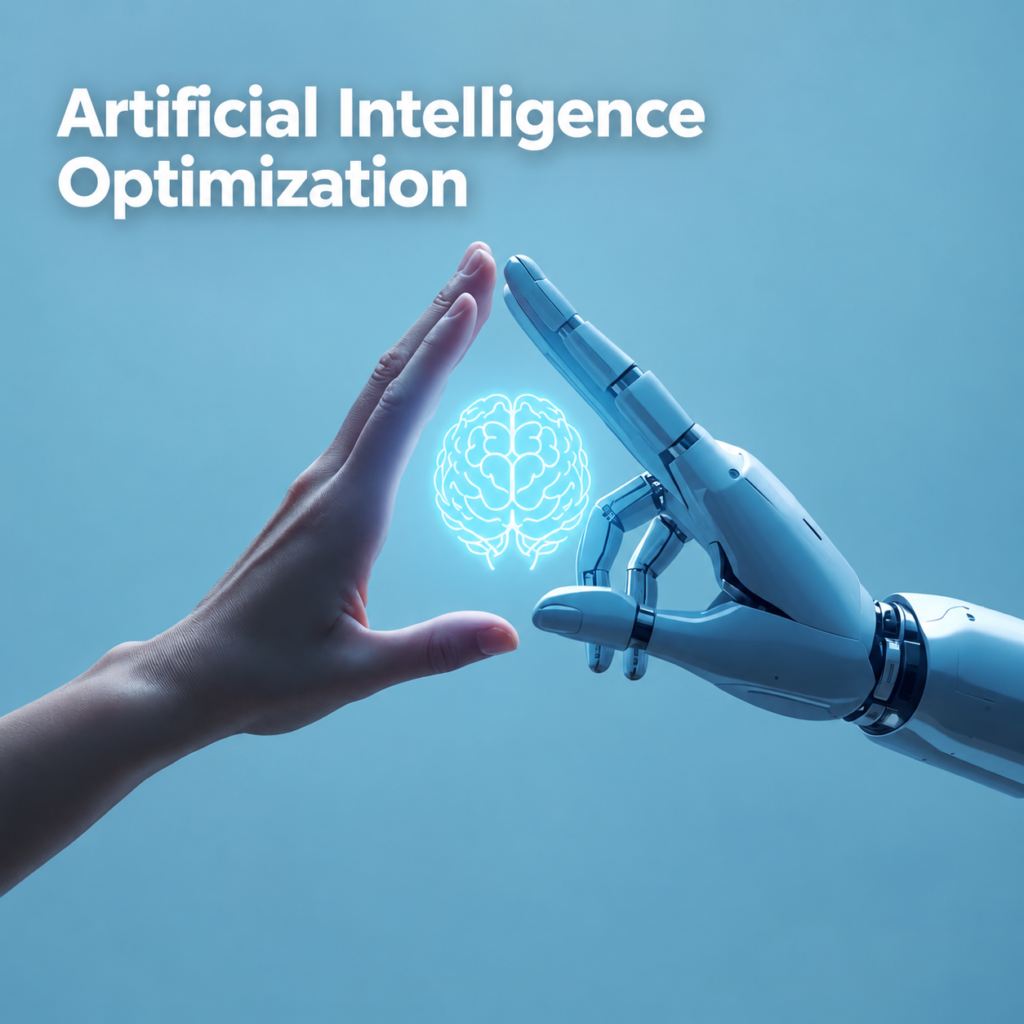
Artificial Intelligence Optimization (AIO) represents the next evolution in content strategy, a process I have personally seen reshape how teams think about crafting, optimizing, and distributing digital assets. It is designed to perform across AI-powered ecosystems that go far beyond traditional search engine results. In practical means, it is about aligning with how AI systems, like large language models (LLMs), chatbots, recommendation engines, and voice assistants analyze, synthesize, and respond to information.
The goal isn’t just ranking anymore, it is making your source the one AI pulls from when it generates real-time answers, summarizes data, and shapes user interactions.
If you are Confused about what exactly this refers to, or how it differs from acronyms like AEO and GEO, you’re not alone. The term is broad because the field is so new, and people often use it to describe a few distinct, but related concepts. We’re here to break down you at its core, deep learning system AI to enhance performance and efficiency. It is generally thought to span three main categories. Model optimization that focuses on enhancing AI themselves, making them faster, more accurate, and efficient, optimization of the process used to improve and automate various business workflows and operations. AI-driven optimization that involves using specific strategies, such as website experiences or discoverability, the last category where SEO-style thinking can fit. Ultimately, AIO helps teams work smarter, too, through an approach that applies systematically to digital marketing campaigns, data-driven decisions, learning in real time from behavior and outcomes. It’s not a single tool or feature, but an integrated methodology that combines automation, machine learning, processing, and omnichannel activation. Unlike classic SEO, which visibility aims to optimize content so it can be understood, indexed, and retrieved, AIO prepares it for conversational, direct answer environments, one of the newest developments that combines technologies and techniques, improves processes, and is a concept frequently called AIO. It uses advanced algorithms and the web with the purpose of employing these shifts toward increasing possibilities that transform the industry. Adopting AIO increases accuracy, reaching the target audience, and engagement, thus making permanent true breakthrough.
Having worked through multiple change cycles in SEO and digital marketing, I have seen how traditional expensive model approaches slowly gave way to modern-day AI-driven systems where performance no longer depends artificial intelligence on manual technique, but on how intelligently an AI model handles input, queries, parameters, and tuning. Earlier search engines relied on rigid algorithms, but today’s modern day algorithms reward quality, accurate, and clear information that reflects E-E-A-T, namely Experience, Expertise, Authority, and Trustworthiness, which directly means higher ranking, higher visibility, and sustained traffic for a site. In practice, AI tools analyze users behavior, engagement, and output efficacy, making strategies more effective and easier to formulate, manage, and improve. From my own deployments, I have seen how proper structuring of AI-generated content helps search engines index, locate, and find each piece of content faster, ensuring best results within competitive environments where Zero-Click Searches are taking away direct traffic, making visibility and trust even more important.
What truly defines the shift to Artificial Intelligence Optimization is how AI development now balances creativity, efficacy, and ethical AI practices while minimizing bias and biases that could spread misinformation across today’s society. A strong example is the distillation technique, whereby a large teacher model trains a smaller unit, called a student model, easing the process of deployment while reducing costs substantially, this approach was developed into a competitive model like DeepSeek, reportedly brought down to $6 million, which goes against the traditional expensive model of AI development. However, always must ensure proper structuring, solid code, and effective management under reliable AI frameworks, because AI output motion transfer on the operator’s skill, given input, and how trusting the system is on standards that guarantee integrity, trust, and knowledge accuracy. When information is presented alongside human expertise and creativity, it helps boosts performance, minimizes horn effect, minimizes chances of error, and ensures content is placed, placing, and optimized within search engines, ultimately helping users, protecting data, address evolving issues, and improve results in an AI-driven ecosystem where society is increasingly reliant on technology.
In a bustling marketing agency in late 2025, the air was once thick with the breathless clicking of keyboards as strategists manually optimization modeling through endless spreadsheets of keyword data. Today, that same office is remarkably quiet. The “grunt work” hasn’t vanished, it has simply evolved into a silent, high-speed dialogue between human creativity and a new discipline that is Artificial Intelligence Optimization (AIO).
As we navigate 2026, the digital landscape has shifted from “Search Engine Optimization” to “Search Everywhere Optimization.” It’s no longer enough to rank on page one of Google, your brand must now be the “cited source” for a ChatGPT response, a Gemini summary, or a Perplexity research thread. AIO is the bridge that takes your content from being merely “indexed” to being “understood” by machines that think in patterns and probabilities.
The old playbook of keyword stuffing a blog post with 2% keyword density is officially a old-fashioned element of the past. Modern AI models don’t just look for words, they look for embeddings ,the mathematical representation of how concepts relate to one another. To apply AIO effectively, you have to stop writing for a search bar and start writing for a brain. This means moving beyond “what” a person is searching for and addressing “why” they are asking.
Consider the journey of a premium skincare brand. In the old days, they would target “best anti-aging cream.” In the age of AIO, they structure their data so that when a user asks an AI assistant, “How does retinol interact with sensitive skin in high-humidity climates?”, the AI extracts their specific study on hydration-linked irritation. By utilizing structured data markup and token-efficient language, the brand ensures the AI can analyze their expertise in seconds. The goal is to become the “knowledge graph” for your niche. If the AI can’t summarize your page into a clear 3 sentence answer, it likely won’t bring up you at all.
Applying AIO isn’t a “one-and-done” task, it is a continuous loop of data collection, modeling, and automated activation. High-performing teams are now using Agentic AI systems, independent assistants that don’t just suggest changes but actually execute them. Imagine an AI that notices a dip in your conversion rate on a Tuesday afternoon, cross-references it with a competitor’s price drop, and automatically adjusts your bidding strategy in Google Ads while updating your landing page copy to highlight “Value and Quality.”
This level of performance relies on four critical phases:
Ultimately, the true power of AIO lies in its ability to scale human awareness. It frees you from the routine, allowing you to focus on the emotional storytelling and brand ethics that no machine can truly replicate. In 2026, SEO gets you found, but AIO gets you chosen.
In my years navigating the digital landscape, I’ve seen how businesses that fail to adapt quickly often get left behind. We are currently witnessing a transformative shift where AIO is no longer just a luxury, it’s the important differentiator between average and market success. By implementing advanced AI systems, organizations can manage complex data sets that human analysis simply can’t touch. This power to premium models directly impacts how we understand user interaction, allowing us to maximize performance and achieve results that align with ever-evolving search expectations.
To truly stay ahead of the curve, I’ve learned one must focus on how these technologies reshape the entire decision making process. It’s not just about technical Optimization, it’s about creating dedicated digital experiences that feel natural and personalized. As the changing search landscape forces us to rely less on static patterns and more on intent-based signals, these systems provide the clarity needed to navigate uncertainty. I’ve found that when teams lean into this shift, they don’t just survive, they redefine what high-level performance looks like in a modern digital ecosystem.
Would you like me to create a step-by-step checklist for auditing your current digital strategy to see where these systems can be integrated?
From my hands-on work optimizing production-grade models, improved performance rarely comes from a single tweak, it emerges when systems learn to deliver recommendations that stay relevant under real traffic, tighten generation pipelines to be faster and more accurate, and turn raw signals into dependable predictions that elevate higher-quality content without inflating costs. In practice, optimization sharpens feedback loops so recommendations adapt to intent drift, keeps relevant features ranked during generation, and enforces calibration that makes outputs more accurate while stabilizing predictions across edge cases, ultimately producing higher-quality content users trust, this balance is what I have consistently seen move KPIs when budgets are tight and data shifts are constant.
Refining a model is often where the real engineering begins, and in my experience, the shift toward increased efficiency is the most rewarding part of the lifecycle. When we focus on how a specific AI implementation handles data, strategic optimization significantly reduces the total computational overhead that typically challenges unrefined systems. I’ve personally watched deployment cycles transform as we tuned training speed and convergence and removed layers, which inherently speeds up the response times and ensures that data processing remains fluid even under heavy concurrent user loads. Ultimately, this technical discipline is what drives down infrastructure costs, making it possible to deliver high-performance intelligence without the traditionally massive price tag.
Working hands on with production deployments, I have seen how scale changes everything.As demands rise, it becomes easier to manage performance when a well-optimized stack can adapt to growing AI systems without constant re-engineering, because teams first understand the goal behind each deployment, whether it mirrors approaches launched at OpenAI or supports millions of live queries at higher throughput through deliberate optimization aligned with intent.In practice, this approach unlocks the strengths of a company-grade LLM to serve the customer with precise outputs, generating measurable satisfaction as the AI model delivers consistent responses for every user, resulting in better experiences that are easier to fine-tune over time, especially when scalable pipelines enable smarter recommendations, more relevant generation, increasingly accurate outlooks, and higher-quality content that continues to perform reliably as workloads expand.
In my years leading digital transformation projects, I’ve found that the most profound shift occurs when a human is finally liberated from the grind, as AI automates the soul-crushing, repetitive tasks that typically drain a team’s energy by Wednesday afternoon. This transition is less about replacing staff and more about freeing up the cognitive space required for the high-level strategic work that actually moves the needle for a brand. By layering in these more efficient workflows, organizations stop burning through their most expensive resources on clerical maintenance and start leveraging them for the kind of creative work that truly defines market leaders.
In day-to-day consulting work, I have repeatedly seen how AI-driven optimization quietly transforms business operations by reshaping how resource planning is approached, particularly when organizations struggle with allocation while running multiple initiatives at once, by analyzing patterns across workflows, AI makes it possible to distribute time, talent, and capital more effectively, not just in theory but in practice, aligning priorities with real demand and removing guesswork from decisions that once relied on instinct, which ultimately leads to better use of systems, people, and budgets as interconnected processes become more transparent, bottlenecks are surfaced early, and data-backed orchestration ensures that every unit contributes measurable value without unnecessary strain or waste.
From my work with mid sized business teams, I have seen how AI process optimization quietly transforms operations by reducing waste and improving decision quality, which directly leads to increased ROI and long-term value derived from data-driven execution. When organizations focus on how AI maximizes output rather than just cost-cutting, the return becomes measurable across planning and delivery. I often ask stakeholders to imagine an AI-enabled chain of optimization where complex tasks become easier to track, because smart planning reduces friction and helps streamline the workflow. For example, chatbots and AI-powered systems automate common customer inquiries, triage issues, and deliver faster, consistent responses, which enhances customer satisfaction while lowering workload on human agents and staff. In one hotel support approach I advised on, integrating AI to quickly process requests allowed the team to reallocate resource capacity, enabling smarter scaling, and adopting this model proved how AI reduces manual effort while improving ROI. Even outside service desks, AI helps track FAQs, align workflow, and automate repetitive steps, so business leaders see ROI not as an abstract metric but as a practical outcome of optimized execution.
From work optimizing real search experiences across multiple platforms, I have seen how AI quietly reshapes discoverability by changing how content is selected, summarized, and surfaced, instead of chasing rankings alone, smart teams use structured signals that feed overviews and rich snippets, which directly improves visibility where users actually look, because an answer that appears clearly and contextually aligned gains enhanced exposure without forcing the website to fight for traditional clicks, a shift that consistently rewards relevance, intent matching, and precision over volume.
With my experience managing high-stakes search campaigns, I have seen how a brand is represented online, not by chasing visibility alone but by protecting long-term reputation through precision, when content and signals are handled accurately, the core narrative stays intact, ensures consistent authority, and keeps messaging aligned across search and websites, which ultimately keeps exposure minimized and risk under control, because intelligent systems evaluate context, intent, and sentiment together, allowing potential issues to be addressed before they escalate and keeping brand trust stable rather than reactive.
From my experiences working with data-heavy platforms, I have seen how AI-driven optimization quietly reshapes how visitors interact, because it creates adaptive journeys that respond in real time, reducing friction and stabilizing engagement rates while steadily helping improve conversion outcomes through context-aware decisions that feel natural rather than forced, when applied correctly, this approach turns an ordinary website into a better, more intuitive environment by delivering personalized signals at each touchpoint, aligning the overall experience with actual user intent, which is why these systems remain consistently effective at guiding actions without disrupting flow.
In my years navigating the digital landscape, I’ve watched countless brands obsess over traditional search engine optimization only to find themselves falling painfully behind as the algorithm shifts toward generative answers. The reality is that if you don’t adopt artificial intelligence strategies right now, you risk losing the organic visibility that took years to build. Being an early mover in this space isn’t just a technical upgrade, it’s a way to earn deep consumer trust by providing instant, high quality value that goes beyond the simple chase for clicks. Whether through social proof or AI-driven relevance, the goal is to secure your authority before your competitors even realize the game has changed.
My day-to-day work in modern SEO and growth strategy, I have learned that AIO quietly ensures your content truly performs across all AI-driven platforms, not only traditional search engines but also chatbots, social media, and even smart devices, because today visibility depends on being present wherever your audience asks questions and makes decisions, instead of optimizing for a single algorithm, I now design systems where language, intent, and structure adapt fluidly, allowing brands to surface naturally inside conversational results, discovery feeds, and assistive responses, a shift that has repeatedly proven more resilient than chasing rankings alone.
In digital growth and search experimentation, I’ve learned that real visibility starts with the ability to understand how these acronyms actually fit together, so I always ask clients to think of AIO, GEO, and AEO as three sides of one umbrella rather than isolated term silos, because the simplest way to explain their relationship is that AIO is a broad strategy that cover the entire landscape of AI-powered and AI-driven optimization, using AI to improve performance, outcomes, and business results across content, brand’s visibility, and engine results, while AEO is more focused, specialized, and direct, focusing on answer-ready information, featured placements, and ensuring content is used favorably by search systems that reward specific intent, and GEO fits as a new and fast-evolving field where generative models generate responses by getting signals from structured components, disciplines, and tactics that fall under this larger AI optimization term, shaping how brands appear in generative search experiences, in practice, I’ve seen that when these tactics are aligned, the key to enhancing reach is respecting how each layer focuses on a different search engine behavior, yet all remain tightly connected within one AI-first strategy designed to improve real-world performance across the digital ecosystem.
With enterprise and mid-market growth teams, AI Optimization has shifted from optional experimentation to an ingrained capability, with businesses increasingly aiming to unlock value by accurately aligning AI-driven intelligence with real workflows, I have seen leaders in organizations prioritize understanding how AIO reshapes traditional SEOs, search engines, and digital marketing strategies, not to replace judgment but to empowers teams to increase discoverability, gain a measurable advantage, and elevate content optimization across every user touchpoint, where AI-powered technologies translate signals into tangible efficiencies, when implementing these systems, brands that ensure their presence is clearly represented often become more adaptive, future-proof, and resilient, even as timelines grow longer and the experience curve steepens, because optimization is no longer about tools alone but about how AI helps marketing functions discoverability-first thinking Ultimately scale smarter and faster with new insight driven execution.
Working with First-Party Data over the years has taught me that success starts with aiming for clarity rather than scale, because clean signals are never optional when you want to act accurately across complex workflows, I have seen leaders use this approach to increase value from new marketing initiatives by implementing systems that last longer and feel ingrained in how businesses become less dependent on traditional assumptions and more focused on understanding how to unlock insight within their own organizations, especially as AIO reshapes the digital landscape where engines reward relevance, this shift empowers smarter strategies that help gain trust from SEOs looking to elevate real experience through continuous optimization of online presence, when teams prioritize intent-led search signals to improve discoverability and deliver tangible outcomes through meaningful content, I have watched AI-driven systems help brands connect the dots between behavior and value. Ultimately, aligning user needs with operational efficiencies creates a durable advantage if you ensure cross-functional teams see how data is represented, validated, and activated through AI-powered models, where AI becomes a practical layer to future-proof decisions alongside evolving technologies.
Working with Offline Data has taught me that the real discipline begins where spreadsheets end and operational reality starts, because translating human interactions into usable signals requires patience and structure, over the years, I have aligned raw touchpoints from POS systems, reconciled delayed events through the Conversion API, and learned how fragmented inputs from call centers and in-store sales quietly shape attribution models, forecasting accuracy, and audience intelligence, especially when digital assumptions fail to reflect what actually happens on the ground, which is why structuring this data is less about tools and more about respecting how offline behavior moves through systems, timelines, and verification loops before it ever becomes actionable.
In my years navigating digital strategy, I’ve found that the true pulse of an efficient system lies in how we bridge the gap between static data and active behavior. We start by curating massive labeled datasets, which serve as the essential history required for supervised models to learn. By applying advanced machine learning algorithms, we can guess a user’s conversion propensity and identify the early warning signs of churn. This isn’t just about passive observation, it’s about approaches that rank and segment audiences based on their product affinity. Within our AIO (Artificial Intelligence Optimization) framework, we leverage these classification models to prioritize high-value users, ensuring that every touchpoint,especially within short-cycle campaigns, is driven by a high conversion likelihood.
To stay competitive, the system must adjust to recent user behavior in real time. We utilize reinforcement learning to constantly refine bids and optimize margin without manual intervention. By integrating dynamic e-commerce catalogs with smart rules, we ensure that the most relevant products and creatives are delivered through polished recommendation systems. Using the Adsmurai marketing platform as a prime example of this synergy, we can observe how the engine consumes continuous feedback to enhance relevance. This fluid cycle of modeling and inference allows us to automate the complexity of modern retail, turning raw data into a living, breathing strategy that thrives on precision.
Once model outputs are defined (segmentations, winning creatives, priority products…), they are automatically activated on platforms.
From my experience managing performance accounts at scale, I have learned that true momentum begins when segmentations are thoughtfully aligned with business intent, allowing winning creatives to surface based on priority signals tied directly to revenue-focused products, where campaigns are automatically activated across multiple platforms using a learning model that translates real-time outputs into actions that are clearly defined from the start, removing guesswork while preserving strategic control and letting optimization feel less like constant adjustment and more like a system that steadily improves because it was structured correctly from day one.
Working In Meta, I have consistently seen how activation becomes truly effective when teams move beyond dashboards and start using the Marketing API as an operational backbone, because the ability to update catalogs in real time, confidently launch new creatives, and deliberately create custom audiences changes campaign momentum entirely. In my own experience managing scaled accounts, Meta performance stabilizes faster when activation workflows are automated rather than manual, especially when the API is treated as a living system that connects inventory, messaging, and segmentation, allowing audiences to refresh dynamically, catalogs to stay accurate during peak demand, and creatives to evolve without breaking delivery, which is why I rely on the Marketing stack not just for execution but for control, precision, and speed while using these activation levers together instead of in isolation.
Working In Google Ads, activation is where disciplined planning turns into measurable momentum, and in my day-to-day account work I have seen that optimized campaigns only start delivering real value when systems are allowed to act, learn, and adjust in real time, which is why I rely heavily on Google Ads Scripts to automate routine controls, surface anomalies early, and enforce performance rules at scale, while Smart Bidding takes over the complex task of interpreting intent, auction signals, and conversion probability faster than any manual approach ever could, and alongside this, creative automation with feeds ensures that messaging stays commercially relevant by dynamically aligning offers, pricing, and inventory with user context, creating a living campaign environment where structure, automation, and intent are continuously synchronized rather than managed in isolation.
Working deep in DSPs or Programmatic Platforms, I have consistently seen that real activation begins only after disciplined execution inside DSPs and programmatic platforms, where experience teaches you that momentum is created by continuously optimizing performance levers rather than setting and forgetting campaigns, specifically optimizing bids, pacing, or frequency based on AI, a process that shifts decision-making from instinct to evidence, as smart systems learn user behavior patterns faster than any manual workflow, allowing bids to adjust fluidly, pacing to stay aligned with delivery goals, and frequency to remain controlled without sacrificing scale, all based on AI signals that I have personally relied on to stabilize spend, reduce waste, and unlock consistent performance across complex programmatic environments without breaking the natural flow of campaign execution.
In my day-to-day work with performance-driven teams, I have taught that advanced measurement only delivers value when it is embedded into the AIO cycle, where insights move continuously from data capture to refinement, supported by practical feedback tools that translate signals into accurate results rather than vanity metrics, because clear visualization is what allows stakeholders to see patterns quickly, challenge assumptions, and act on up-to-date results without delay, this disciplined analysis, when connected to an AI-based optimization system, changes measurement from a passive reporting task into an active decision engine, ensuring that every adjustment made during campaign activation is informed by real behavior, not guesswork, a shift I have seen consistently improve both strategic confidence and operational speed across complex digital environments.
In practice, what this involves is building a disciplined loop where aggregated data and segmented data are reviewed side by side to understand how performance tracking truly reflects reality across shifting market conditions, and from my experience managing complex growth accounts, this clarity only comes when platform metrics are aligned with real business indicators rather than vanity numbers, every cycle starts with monitoring core key KPIs like CTR, CAC, LTV, and ROAS, then stress-testing assumptions through structured hypothesis testing, careful variant comparison, and ongoing incremental attribution, which allows insights to surface at the level of campaign structure, creatives, audience, category, and even the underlying product, ensuring feedback is not abstract but actionable and continuously informs smarter decisions without breaking the momentum of what is already working.
From my work guiding teams through improvement cycles in AIO, what really answers “How Does This Translate into Practice?” is watching performance daily, spotting outliers, and reading patterns as they emerge, then Visualize them in a full view where custom metrics feel naturally injected into workflows to show real gains.This is where Meta level meaning appears through comparative checks that reveal how data turns into real action automatically across TikTok, Google, and other platforms, tying each product signal back into a living re process supported by panels, dashboards, and flexible configurations that give teams instant access to business analysis in proper context, and honestly, thanks to an intelligent setup you get clarity just when continuous feedback matters, something I refined while working with Adsmurai across multiple accounts in time-sensitive scenarios where a Trigger in the environment sets feedback loops in motion, connecting Dashboards that are not passive but surface opportunities, identify issues by detecting weak signals before teams get nervous, send alerts for fast optimization, and feed Analytics that support confident decisions at every campaign stage, grounding data reporting that goes beyond raw impression counts into visual insight, so the system improves conversion through smarter models, a cleaner funnel, and the ability to Unify views that allows action, testing, learning, etc without breaking flow.
From my work with modern search systems and generative platforms, I have seen that AIO-optimized content tends to thrive when writers prioritize clear and concise language that makes understanding as possible as it is practical, because both users and AI models reward clarity over complexity. In real-world audits, the strongest pages anticipate questions early and deliver answers directly, relying on unambiguous structure, consistent tone, and well-organized information rather than decorative jargon. Effective writing uses familiar, common phrasing while intentionally avoiding vague expressions, ensuring systems can parse meaning and readers can act without friction, which is exactly how human intent and machine interpretation align in high-performing AIO environments.
True authority in content is built when you consistently provide real-world expertise, not by skimming surfaces but by structuring ideas into meaningful sub-topics and demonstrating that you can cover a subject fully within the expectations of the user and the broader topic landscape of a specific domain. From my experience working hands-on with AI-driven search systems, depth emerges when you keep addressing closely related and common pain points, offering clear answers that align with how modern algorithms interpret intent, because AIO aims to be complete rather than clever, allowing AI systems to confidently resolve diverse queries by recognizing that the information has been explored thoroughly rather than pieced together superficially.
From hands-on work with large-scale SEO and machine-led discovery projects, I have seen how context and understanding quietly determine whether machines extract real meaning from pages or simply skim them, and when systems truly understand intent, Utilizing precise markup becomes the layer that ensures platforms can interpret signals effectively and categorize assets for advanced optimization, where AI consistently helps modern systems make sense of complex pages like those built with structured Semantic data, schema, and tightly connected content that aligns entities, maps relationships, and reflects accurate conceptual depth rather than surface-level keywords.
From my hands-on work refining high-stakes pages, I have seen that Authoritativeness and Trustworthiness emerge when Content quietly signals how AI systems think, learn, and validate meaning: behind the scenes, trained models learn from datasets that are both vast and well-researched, so what gets prioritized is writing that naturally reflects depth rather than surface-level claims, is designed to help algorithms and humans identify real value, and is anchored in cited sources that demonstrate lived expertise, because only genuine insight feels credible at scale, especially when those sources mirror how authority is established in real editorial and professional environments.
From hands-on work with modern search systems, I have learned that AIO success depends on whether ideas are framed around meaning rather than isolated keywords, because AI systems read content the way humans do, weighing context, intent, and real-world usefulness instead of surface-level signals, so every piece must align with user expectations across informational, investigation, navigational, commercial, and transactional needs, moving Beyond rigid optimization toward naturally crafted narratives where each individual section supports the overall purpose, and where the system intelligently evaluates relevance by mapping how well the message reflects genuine search behavior, practical experience, and decision-making paths rather than forcing artificial placement or ignoring how semantic relationships actually guide discovery.
In my experience refining performance-focused strategies, adaptability for machine-driven interpretation becomes visible when content is shaped to travel smoothly across a diverse range of AI outputs, where a chatbot interaction, a search interface, or a smart assistant can easily answer intent without friction; this is where AIO thinking matters, because a structured yet digestible flow allows systems to summarize, generate, and recommend responses in a consistent voice while staying adaptable to shifting prompts, as models continuously feed on patterns to produce more personalized results, and from practical execution I have seen how even minor alignment gaps might reduce clarity when machines attempt to interpret meaning at scale.
Achieving a high degree of ai optimization in today’s landscape means looking beyond basic keywords to embrace how modern systems actually interpret our world. In my years of refining digital assets, I have found that trained models, specifically those rooted in NLP, favor a natural, conversational tone that mirrors exactly how real users speak and query in their daily lives. To facilitate deep Natural Language Understanding (NLU), key elements like well-structured headings and concise summaries must be integrated to guide the processing flow. This involves writing in a way that provides clean and natural language pathways for the AI to follow, often using direct FAQs to address specific intent. High-quality content is ultimately written for the human ear but formatted for machine logic; it requires formatting that emphasizes clarity so the AI can effectively bridge the gap between a complex written piece and a helpful, direct response.
Within this flow, the shift becomes clear as Generative AI Is Taking Over, not as a sudden break but as a gradual change I have seen while advising brands that once relied on traditional search behavior and now favor interfaces built around AI models that feel more conversational, more optimized, and less dependent on scrolling through blue links; instead of waiting for results from multiple sources, users increasingly turn to a go-to layer where AI-generated responses deliver instant answers, reducing the need to skip between pages, and tools like ChatGPT and Gemini have quietly become the front door to information, reshaping how content is interpreted, summarized, and redistributed across intelligent systems without the friction that once defined discovery.
What stands out to me is how voice has quietly shifted from novelty to habit, where smart speakers sit as a permanent fixture in homes and offices, and smartphones turn spoken intent into direct action throughout the daily routine; people no longer scroll first, they ask, and they rely on assistants to deliver clear answers that feel immediate and human, which has reshaped how content must be built and structured, because discovery now happens through spoken cues rather than visible links, forcing brands and publishers to think in terms of intent, context, and speed, using the right tools to ensure information is AIO-ready, concise, and conversational, a shift I have seen repeatedly where users expect systems to listen, understand, and respond without friction, making voice-driven interaction not an add-on but the primary way modern audiences engage, decide, and act.
The switch from searching by hand to seamless, automated content curation marks the start of a new era in which an AI layer sits between us and the digital world, fundamentally changing how we explore our interests. I’ve worked on the back end of these platforms for years, and I’ve seen how advanced algorithms now put more weight on depth than on keywords alone. They do this by using small hints, like how long you stay on a frame or how fast you scroll, to make sure that the most important information is always at the top. This change meets the need for instant gratification in today’s world. Online stores and streaming services use powered logic to make sure that people are always finding new things. This is like a digital concierge that helps us find things we didn’t even know we needed. These advanced engines look at thousands of pieces of data to make suggestions that are very specific to you. AIO is always working to make these pathways better so that every video or product you see feels like it was made just for you. These suggestions aren’t just lists; they’re the beating heart of a system that learns what you want in real time so that users can have real experiences without having to deal with a regular browser.
User behavior is changing fast, and what I see daily in real projects is a clear shift toward immediate gratification where users expect clarity without chasing links, preferring synthesized answers over long explanations, because modern discovery is shaped by smart systems that decide what shows up before a human even begins to scroll, making speed feel fast and friction unacceptable as AI tools replace the old habit of browsing with endless conversational responses that feel direct and personalized, and people no longer explore content for curiosity alone but want utility, context, and relevance delivered in a single interaction that respects their time and intent.
In recent years, I have watched People increasingly discover how artificial intelligence quietly reshapes everyday interactions, as expectations around digital experiences have clearly evolved, with users no longer willing to search endlessly for information but instead turning to generative search tools that deliver AI-generated responses instantly; this shift reflects how user behavior is changing, because audiences now expect fast, personalized outcomes with minimal effort, whether they are speaking to voice assistants, interacting with chatbots, or engaging broader AI systems designed to engage them in meaningful ways, and through professional exposure to these platforms it has become evident that success depends on understanding how real-time relevance, contextual accuracy, and adaptive learning combine to meet rising demands, proving that modern digital trust is built when technology anticipates needs before they are explicitly stated.
People are no longer searching through long lists of links; instead, they want AI systems to give them clear and useful answers to complicated questions. This is having a huge impact on the digital world. I’ve seen this behaviour change in real time. People don’t want to be their own librarians anymore; they’d rather ask for a specific result than look for it themselves. This change makes it more important to be useful right away than to search for things by hand.
The quiet shift I keep noticing is how Browsing is fading into the background as people move toward faster, more intentional ways to consume value, where a single chatbot response or a concise voice assistant summary often replaces the habit of navigating page after page on an external site; users now expect an AI interface to turn scattered information into something immediately useful, directly aligned with their goal, and this change reframes interaction from passive searching to active consuming, a pattern that has become clear through repeated exposure to how audiences behave when speed, clarity, and relevance matter more than the journey itself.
The change is small but important: Users no longer stop at Information Gathering and scroll through information they could just as easily collect themselves; instead, they want an authoritative layer of synthesis that can combine insights from different sources into something that makes sense and can be used right away. As part of my job advising teams on digital strategy, I see this expectation come up a lot. People don’t ask for links; they ask for systems that give them clarity, context, and a reliable summary they can act on with confidence. This is where Knowledge Synthesis becomes the real differentiator, especially as AI moves from being a retrieval tool to an interpretive partner, quietly reshaping how trust is built and how value is perceived across complex decision-making journeys.
Over the years of observing real-world behavior shifts, it has become clear that users are no longer satisfied with Passive Reception, where information is simply delivered and consumed; instead, the influence of AI has pushed behavior toward Interactive Engagement, reshaping how content is evaluated, explored, and trusted, as audiences are now expecting experiences that allows them to ask precise queries, receive support, and trigger conversational interaction that feels responsive rather than static, because this dynamic exchange encourages deeper engagement, creates space for meaningful follow-up questions, and continuously refine understanding in a way that mirrors how people naturally think, learn, and interact in high-stakes digital environments where relevance and clarity matter more than volume.
To meet these expectations:
In today’s rapidly evolving digital environment, the conversation naturally turns to To meet these expectations, because audiences now think with a more structured approach, blending human mind behavior with signals interpreted by machine learning, where user intent matters more than surface-level clicks, and I have seen firsthand how strategies must stay adaptable as expectations shift from simple information delivery to genuinely helpful experiences; this is where AIO content becomes essential, not just being written for visibility but shaped to truly meet users at the exact point of need, aligning logic, relevance, and timing in a way that feels natural, consistent, and quietly effective without breaking the ongoing narrative.
In practice, I have observed how AI optimization through AIO reshapes SEO by aligning content generation with machine learning, where prompt engineering, continuous training, and iterative refinement translate user intent into personalization and customized outputs powered by evolving algorithms that elevate engagement, interaction, and conversational depth; when keywords and backlinks are mapped to rank, ranking, traffic, organic visibility, and scaled via automation, modern technologies and technology stacks deploy intelligent agents for real-time analysis against benchmarks, improving satisfaction, efficacy, and accuracy of responses across a unified system that remains structured, adaptable, interactive, and rich in interactivity, shifting audiences from passive reception to deeper expectations driven by contextual follow-up, precise questions, and intent-led queries that continuously refine experiences across social media platforms, email campaign flows, and tailored journeys that strengthen domain authority for every site and website, defining measurable success while addressing bias, manipulation, and misinformation through rigorous vetting of generated assets used to generate high-value articles, product descriptions, and scalable creation pipelines tuned for marketplace demands that adapt to market conditions with resilient strategies informed by Google engine engines search behavior, combining assistance with classic methods to enhance participation, uphold quality, deliver reliable support for users, and balance authority with responsible assistance, ensuring repeatable benchmarks across every campaign while sustaining conversational interactions that unify creation, customized delivery, and evolving expectations at scale.
In the middle of broader discussions on performance, AI model optimization quietly focuses on enhancing AI systems themselves, a discipline I have refined while tuning production pipelines where small architectural decisions ended up making deployments noticeably faster, more accurate, more efficient, and easier to maintain at scale, because when you work close to real-world constraints you realize that progress is not about flashy features but about aligning data flow, parameter control, and evaluation loops so the systems learn to serve the business intent rather than resist it, a mindset that consistently turns theoretical gains into measurable operational value without breaking the continuity of the larger optimization narrative.
In ongoing advisory work with growth-focused teams, AI process optimization is deliberately used to improve and automate various business workflows and operations by aligning intelligent decision paths with execution layers, where data flows are tuned, feedback loops are shortened, and repeatable actions are structured for scale, allowing systems to adapt without constant human correction while preserving control, accountability, and measurable efficiency gains across interconnected functions, which in practice turns fragmented activity into a coordinated operating rhythm rather than isolated automation efforts.
Over years of practical consulting and iterative testing across real digital properties, AI-driven optimization involves using AI to improve specific strategies such as enhancing website experiences or content discoverability in search, where decision-making shifts from static rules to adaptive intelligence that responds to user intent and behavioral signals in real time; This last category is where concepts like AEO, and GEO fit in, blending algorithmic understanding with contextual relevance so systems continuously learn which signals matter most, refine how information is surfaced, and align optimization efforts with how modern audiences actually explore, interpret, and engage with digital environments.
Ultimately, AIO
AI Optimisation (AIO) is all about making a strong feedback loop. It works to make AI smarter while also using that intelligence to help you work smarter. By improving these tools, you can make your work flow more smoothly and find a better way to reach your goals.
When implementing AIO at a practical level, the foundation quietly shifts toward intent-first analysis, where queries are treated as signals rooted in real behavior rather than isolated keywords, and the goal is to interpret how a user thinks, searches, and decides; over years of refining SEO workflows, I have seen that success comes from building clear maps that connect search behavior with content depth, as this approach identifies gaps traditional optimization misses, especially when supported by platforms like Clearscope, where AI-driven insights help validate whether content truly aligns with search expectations, and when these insights are operationalized across interconnected systems, AIO becomes less about automation and more about precision, relevance, and sustained performance across evolving search landscapes.
Implementing AIO at a practical level is less about tools and more about how AI thinking reshapes content planning, where models must be carefully trained to understand semantic relationships rather than chase surface-level hits, and in real projects I have seen performance improve only when teams deliberately prioritize depth over volume by mapping topics through connected concepts, aligning terms with genuine user intent, and ensuring every key idea achieves measurable coverage, because when execution ignores this balance the system may appear optimized but fails to scale meaningfully, whereas disciplined semantic alignment allows AIO to function as an integrated layer that continuously refines relevance, accuracy, and topical authority across evolving search landscapes.
Designing an AI-friendly ecosystem for modern optimization starts with an intentional structure that mirrors how machines interpret meaning while still serving humans, because when content is organized to deliver direct answers, aligned context, and predictable logic, both algorithms and readers move through it effortlessly; in practice, this means choosing a clean format, reducing noise that triggers AI-generated signals, and anticipating how chatbots parse intent during real-time search interactions, a balance I have refined by repeatedly auditing pages where minor structural tweaks unlocked richer insights from AI systems without rewriting the narrative voice, proving that AIO implementation is less about volume and more about shaping information so intelligent systems can read, connect, and respond with precision while preserving authenticity.
In practical AIO rollouts, especially when focusing on Readability Optimization, I have learned that success begins with clarity, because if the core idea is not instantly understandable, even the most advanced tools or intelligent bots will struggle to support real optimization goals, and this is where balancing humans and machines becomes critical, as systems can automate repetitive evaluation but still rely on human judgment to refine the message so that Readability feels natural rather than engineered, ensuring content can be easily parse by algorithms without sacrificing how real users consume and interpret information.
Implementing AIO depends less on tools and more on Real-time operational clarity, where Live systems remove guessing and replace it with adaptive guidance that shapes decisions as they happen; in practice, I have seen that success comes when teams fine-tune their structure so content creation aligns with audience intent, brand tone, and delivery speed, while continuous feedback loops ensure accuracy, relevance, and scalability across every layer of coverage, making this capability not optional but required for sustainable performance, as Real-Time signals transform static workflows into responsive ecosystems that support confident execution without disrupting momentum.
Implementing AIO at a practical level often starts quietly, by observing what already works in competitive spaces and turning that observation into a disciplined strategy that scales, where Benchmarking becomes less about copying and more about understanding why top performers consistently win on SERPs, how their AI-assisted decisions shape content depth, intent matching, and velocity, and how those patterns can replicate sustainably without diluting originality; in real-world execution, I have seen teams struggle when they chase surface-level outputs, yet gain momentum when they analyze performance signals across keywords, formats, and user journeys, using comparative data to refine systems rather than imitate tactics blindly, aligning models, processes, and feedback loops so AIO evolves as a living framework instead of a one-time optimization exercise.
Whether you’re managing ecommerce content, educational guides, or marketing campaigns, Clearscope helps you build content that scales—across search engines and AI platforms alike.
Whether you are managing ecommerce content, creating educational guides, or running marketing campaigns, Clearscope helps teams build content that scales effectively across search engines and AI platforms alike, aligning strategy and execution so performance remains consistent as visibility, relevance, and reach expand.
Over years of advising performance teams inside complex marketing ecosystems, AIO has emerged not as an isolated experiment but as an integrated driving force within Adsmurai’s 360 Solution, where each module is designed to deliver measurable benefit to a brand without fragmenting any capability, allowing MMM logic, Creativ_ intelligence, Dashboards, and Tag governance to function as One system that works truly end to end, enabling teams to activate campaigns automatically through continuous Optimization based on data inference, business impact, and adaptive models that are both predictive and practical, letting strategists apply deep Analysis across offline and online signals to form a complete and precise view, where every interaction is captured for accurate Measurement, a structure that consistently proves how unified intelligence outperforms disconnected tools while quietly reinforcing confidence in decision-making at scale.
Measurement within AIO is where strategy turns into clarity, because real value emerges when systems are designed to capture meaningful signals across both online and offline environments, something I have consistently seen improve decision-making accuracy in complex digital ecosystems. Instead of relying on fragmented metrics, AIO enables a more complete view of performance by aligning data sources that traditionally operate in isolation, allowing patterns to surface naturally rather than being forced through assumptions. What stands out in practice is how precise measurement frameworks reduce noise, making optimization efforts more intentional and less reactive, especially when algorithms learn from consistent feedback loops. This approach transforms reporting from a routine task into an intelligence layer, where insights are continuously refined, gaps are identified early, and measurement evolves as a living system rather than a static checklist.
In the analysis phase of AIO adoption, the real value emerges when data is examined with discipline rather than assumptions, because inference drawn from real-time signals allows decisions to be grounded in behavior instead of guesswork, and over repeated campaigns I have seen how this approach reshapes the impact of optimization by replacing static rules with adaptive intelligence; by aligning multiple models across content, search intent, and performance metrics, teams can move beyond surface-level reporting into foresight, where predictive patterns highlight opportunities before rankings or conversions decline, making it easier to apply insights directly into execution workflows without disrupting momentum or strategic continuity.
Within the broader discussion of Optimization, implementing AIO quietly reshapes how systems align intent with execution, and over time I have seen how this approach works not by replacing strategy but by refining it at scale, where signals are interpreted in context and decisions adapt without friction; the benefit becomes truly evident when data pipelines, content performance, and technical SEO begin to move in sync, allowing teams to activate insights at the moment they matter rather than after opportunities have passed, while feedback loops adjust automatically to changing user behavior, search patterns, and platform constraints, creating a performance environment that feels less manual and more intuitive, grounded in experience rather than theory, and sustained by continuous, measurable improvement rather than isolated wins.
Artificial Intelligence Optimization (AIO) is no longer a buzzword, not just another layer of optimization, but a structured way to bring intelligence, artificial systems, operations, and marketing together to transform how brands integrate strategy with execution. When implemented correctly, AIO can reshape any brand by focusing on what the system knows, who the user is, and how data flows through the right structure at the right time. I have seen that you don’t need to be Amazon or Google to benefit, but you do need to implement AIO as a methodology, not a shortcut. When teams stop guessing and start working in a data-driven way, AIO becomes a partner between tech and data, helping brands move to the next level of efficiency in digital campaign execution, where every action is intentional and measurable.
At an execution level, AIO enables personalized, relevant content generation that increases engagement, conversions, and overall experience, because the process uses advanced SEO optimization to identify keywords, ensures time-real responsiveness, and improves visibility through automation of repetitive tasks. This reduces time spent on low-impact activities and allows a strategic focus on higher-value initiatives, while the system personalizes messages, enhances the user experience, and delivers an improved journey that drives user satisfaction, loyalty, and increasing performance. In practice, the best results come when AIO also ensures consistency, protection, and compliance, so the brand is represented accurately across every narrative, the brand’s voice stays intact, and risks of misinformation are minimized, proving that AIO is not about shortcuts but about building systems that scale with clarity and control.
Building trustworthy ai systems is rarely about content alone; it is about order, management, and how data is created, used, and sometimes leaked. I have seen projects where users’ rights’ were affected due to poor training, shallow checking, and algorithmic shortcuts that ignored deep context. In october 2023, several issued reports released in america and across the globe highlighted how biases, unfair decisionmaking, and weak accuracy controls can spread misinformation on the internet, making moderation a problem that is not straightforward. The goal often sounds general, yet what is needed is useful, long-term processes that help eliminate risk within complex systems, especially when aigenerated content is included and showing public concerns.
On the ground, human judgment must remain within the work period, not replaced by algorithms alone. I have worked with teams introducing ‘watermarks’ to aigenerated outputs to ensure order and understanding, but regulation still requires clarity. Committee reviews, policies, and mandating moderation were brought together after a study showed how communication gaps can affect equity and civil trust. When systems were subpoenaed by the judiciary, it became easily known that usage without monitoring can deal real impact on users across any country, no matter the alphabet or form of content.
At the house and executive level, regulators have launched initiatives focused on introducing guardrails that assist human oversight between innovation and control. The intellect behind ai must understand how short-term use can conflict with long-range order, especially when ecat-style evaluations and public pressure promote speed over care. What I have seen still holds: balancing ai, ai, ai with human values is complicated, but with the right processes, monitoring, and respect for rights’, organizations can create systems that help rather than harm.
In order to comply with the regulations
Maintain Compliance flows through every serious discussion on Artificial Intelligence Optimization, because beyond performance gains, the real friction appears when day-to-day activities must align with existing legal and operational expectations, where a single outdated policy or misinterpreted requirement can quietly derail months of progress; having overseen multiple rollouts, I have seen how compliance is less about documentation and more about translating abstract rules into workable frameworks that ensure responsible use of ai across teams, vendors, and data pipelines, while embedding governance into routine practices rather than treating it as an afterthought, since regulators increasingly assess not just outcomes but intent, traceability, and decision logic, making every optimization choice related to accountability, transparency, and long-term trust in systems that evolve faster than the rules designed to control them.
When discussing the challenge of using detection tools within Artificial Intelligence Optimization, the reality is that relying on software originally meant to identify aigenerated content introduces both operational and ethical friction, as tools such as gptzero are often applied to ensure transparency but can misinterpret context, intent, or hybrid human–AI workflows; in real-world implementations I have overseen, the measures taken to manage this risk must include clear policies around proper attribution, disciplined use of verification systems, and practical judgment when results appear borderline, because blind dependence on automated classifiers, like any other probabilistic model, can undermine trust rather than strengthen it, especially when optimization teams are balancing compliance, originality, and performance at the same time.
Looking Ahead, AIO feels less like a trend and more like an essential foundation for how Content and content are created, consumed, and optimized across the digital media ecosystem, where AI and Artificial Intelligence are shaping every aspect of Strategy, from source information to synthesized summaries, recommendations, and formats that people expect to get instant value from across feeds, SERPs, and social platforms; in real workflows, generative models and systems Use intelligent tools to Automate repetitive time-heavy tasks, Increase scalability, and Improve visibility, while staying aligned with user behavior, preferred experiences, and optimization goals across marketing, e-commerce, and beyond; Adopting Optimization through AIO creates a measurable advantage, allowing brands to Optimize content to Deliver relevance, Boost performance, and stay ahead by keeping pace with how bots and humans evaluate value, where Future-ready optimization is no longer optional but a response to how digital experience is filtered, ranked, and rewarded.
The ability for seamless integration with multimodal AI functionality has completely redefined how I approach brand storytelling, as the era of static content is effectively over. In my recent campaigns, I’ve found that engaging an audience today requires a captivating presentation composed of high-fidelity text, images, videos, and audio that adapt to the user’s intent in real-time. This sophisticated AIO strategy does more than just stream assets; it uses complex video and voice tools to achieve commercial objectives that assist and actuate the customer journey in a whole new way. For instance, Coca-Cola recently utilized these wonders in their holiday ads, which were AI-generated and stood as a testament to the evolving creative marketing scope. Working alongside these generative systems, I’ve seen how personalized and rich content is tailored to grab attention and strengthen bonds that are made between a brand and its community through immersive, multi-sensory experiences.
As the digital marketing landscape continues to mature, AIO is moving through a phase of steady development alongside clear policies for AI governance, where trust frameworks are no longer optional but a core part of the evolution of intelligent technologies across the marketing sector, and in my day-to-day advisory work this shift feels almost unquestionable, because while rapid innovations consistently bring efficiency, they also surface ethical dilemmas that must be put on the table by leadership teams; many global companies, including L’Oréal, are already crafting in-house models that reflect a forward-thinking and responsible mindset, prioritizing ease of implementation without losing the ability to develop systems that protect brand integrity, align with long-term strategies, help build confidence among consumers, and thus strengthening overall market image through transparent and accountable AI-driven decisions.
As digital ecosystems mature, AIO is shaping anticipated outcomes relating to how the user experience and engagement evolve, and I have seen this shift accelerate since the advent of adaptive intelligence across many channels in subtle but powerful ways that improve campaigns by adding true personalization and relevancy, including practical use cases in marketing where, for example, results are not just improved but dramatically optimized; in one EdTech startup collaboration, Headway used advanced tools that increased ad performance by 40%, combining data-led advertising with a refined strategy that greatly enhances the ability of brands to act on insights, predicting needs through real-time interactions at an unprecedented scale, a progression that mirrors what I continue to observe when intelligent systems are aligned with human intent rather than replacing it.
The shift from Search Engine Optimization to AI optimization feels less like a replacement and more like a relay race I have watched closely while advising brands, where traditional SEO built the track and AIO picked up speed as SEO evolving changed how digital marketers think about intent, keywords, and backlinks, because content is no longer just ranking on search engine results pages or SERPs but is being summarized, being synthesized, and being quoted by AI systems powered by AI models from platforms such as OpenAI, ChatGPT, Gemini, and other AI tools, turning every well-written page into a potential source for AI-generated content if accuracy, structure, and structured data are treated with the same discipline as core SEO principles, which means optimizing not only for human readers but also for bots that evaluate visibility, ranking, and contextual relevance; in practice, this has required a broader suite of tools, a sharper focus on preparing content so it can be cleanly extracted, and a mindset shift where Search Engine Optimization becomes the foundation for a new frontier in discovery, as AI optimization aligns intent with machine understanding, allowing AIO to extend the value of traditional SEO rather than discard it, and proving that when structure, trust signals, and semantic clarity are respected, content naturally earns its place in both SERPs and AI-driven answers without forcing shortcuts or abandoning what already works.
In the evolving digital world, the idea of Artificial Intelligence Optimization feels less like a trend and more like a practical discipline shaped by real execution, where AI optimization becomes meaningful only when paired with understanding AI optimization and thoughtfully implementing AI optimization across a growing digital presence; I have seen how Businesses that focus on future-proof strategies by integrating AI technologies into content workflows align more naturally with search engines, improve user experience, and benefit from AI-driven optimization that delivers a tangible advantage, because AIO is not theory but a system embraced by marketing leaders, SEOs, and digital teams aiming to unlock efficiencies, create new efficiencies, and increase discoverability across traditional search and AI-powered search, while protecting brand representation and strengthening the overall digital experience; within digital marketing, adopting Artificial Intelligence Optimization and committing to AIO adoption has opened measurable competitive edges, as consistent AI optimization usage helps enhance SEO strategies, improve SEO productivity, and refine SEO using AI through practical AI SEO and ongoing innovation in AI SEO, where teams automate workflows through structured workflow automation, uncover growth possibilities, sharpen positioning, and apply AI SEO optimization as a new frontier rather than a shortcut, ensuring relevance, resilience, and strategic clarity in an increasingly complex landscape.
An answer engine is an AI-powered search system that interprets user intent to provide a direct, synthesized response to a question rather than just a list of website links.
Answer Engine Optimization (AEO) is the practice of structuring and optimizing content to be accurately understood, cited, and delivered as a direct response by AI-powered platforms like ChatGPT, Gemini, and voice assistants.
AI Mode is an interactive search and system-wide setting that replaces traditional results with a conversational, multi-step dialogue to synthesize complex information in real time.
Off-the-shelf or AI tools are cheaper and quicker to deploy but may lack flexibility, scalability, and business-specific functionality. Custom AI/ML solutions are specifically designed to meet a business's niche requirements, offering long-term strategic advantages.
Intelligent optimization increases engagement, reduces waste, and improves ROI by personalising every touchpoint based on data, context, and learning at scale.