
335,520 Deleted Google Reviews Analyzed
A large scale examination of 335,520 deleted Google reviews has revealed clear patterns in how Google’s systems decide which feedback stays visible and which disappears.
The study covered reviews removed from more than 22,000 Google Business Profiles over a multi-year period ending in early 2026. The findings offer practical guidance for any business that relies on reviews to build trust and attract local customers.
Why This Analysis Matters

Google reviews directly influence local rankings, click-through rates, and customer decisions. When reviews vanish without warning, star ratings drop and visibility can suffer.
Understanding the common traits of deleted reviews helps businesses collect stronger, longer-lasting feedback instead of relying on volume alone.
Major Patterns Found in the Data
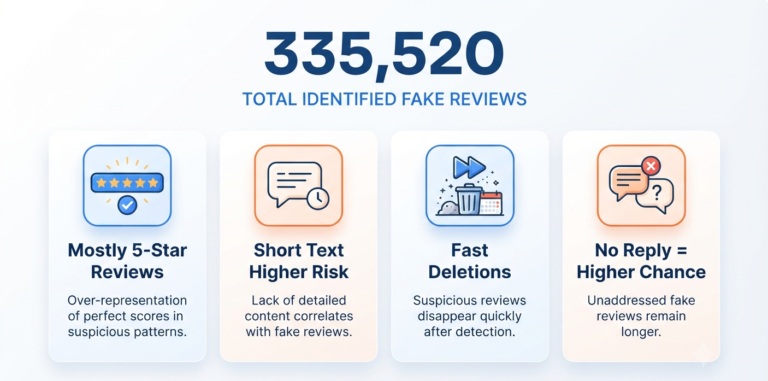
The analysis highlighted several consistent trends:
- The vast majority of removed reviews carried five-star ratings.
- Short or generic comments disappeared more often than detailed, specific ones.
- Reviews posted in rapid clusters faced higher removal rates.
- A significant portion of deletions occurred within the first two weeks after posting.
- Reviews that received no business reply were removed more frequently than those that did.
These patterns suggest Google’s systems prioritize authenticity signals over simple star counts.
Common Reasons Reviews Get Removed
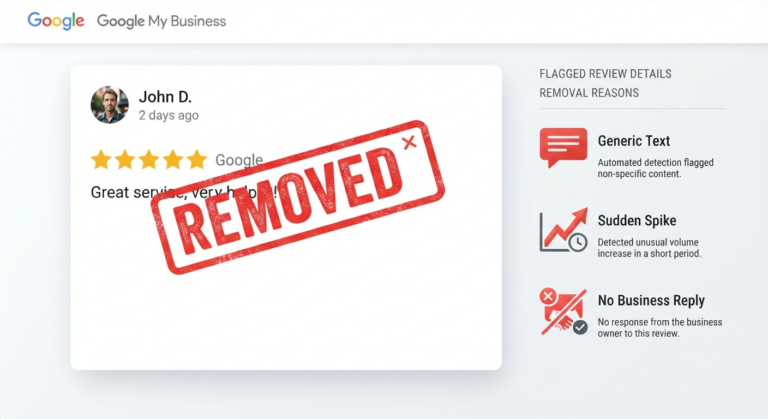
Google does not publish exact removal criteria, yet the data points to several recurring factors:
| Factor | Observed Impact |
|---|---|
| Generic or very short text | Higher chance of removal |
| Sudden spikes in new reviews | Increased risk of mass deletion |
| No business response | More likely to be flagged |
| Rating-only (no text) reviews | No longer safer than written reviews |
| Reviews from new or low-activity accounts | Elevated removal rates |
Fake, incentivized, or policy-violating reviews remain primary targets, but even genuine feedback can disappear if it lacks supporting signals of authenticity.
What the Numbers Mean for Businesses
Businesses that treat review collection as a pure numbers game face greater risk. Profiles that steadily receive detailed, experience-based reviews tend to retain more of them.
Profiles that suddenly gain dozens of similar five-star comments often see large portions removed later.
The data also shows that responding to reviews, both positive and negative, correlates with better retention. A thoughtful reply appears to act as one authenticity signal among many.
Practical Steps to Protect Your Reviews
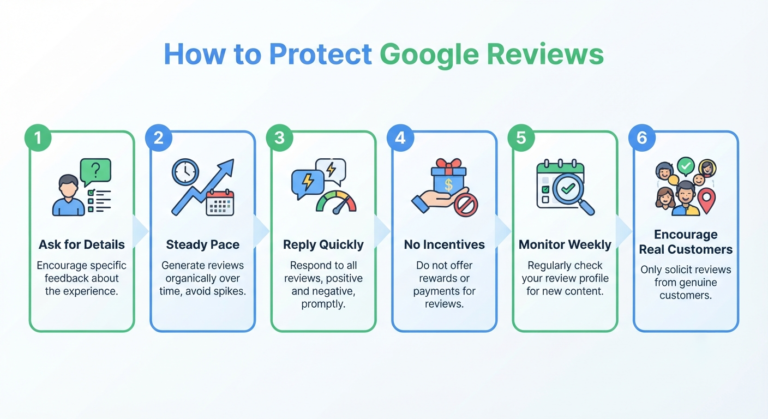
Focus on quality and natural growth rather than volume:
- Ask customers for specific details about their experience (service, staff, location, outcome).
- Space out review requests instead of launching large campaigns at once.
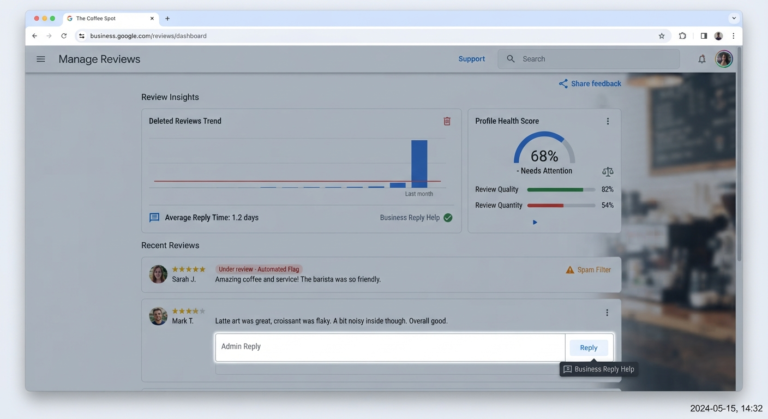
- Reply to every new review within a few days.
- Avoid any form of incentive or payment for reviews.
- Monitor your review count weekly so sudden drops are noticed quickly.
- Encourage reviews from customers who have a clear, verifiable connection to your business.
How to Recover or Respond When Reviews Disappear
Once Google removes a review, recovery is rarely possible through appeals. The better approach is prevention. Keep a private record of important reviews (screenshots with dates) so you retain the content even if the public version vanishes. Use the loss as a signal to refine how you request future feedback.
Key Takeaways from 335,520 Deleted Reviews
- Five-star ratings dominate the deleted pool.
- Detail and specificity improve survival chances.
- Natural posting pace outperforms sudden volume.
- Business replies appear to strengthen legitimacy signals.
- Rating-only reviews no longer enjoy special protection.
So I Want To Say
The examination of 335,520 deleted Google reviews confirms that Google’s systems continue to grow stricter. Businesses that shift from chasing raw numbers to building authentic, detailed customer feedback stand a much better chance of keeping the reviews that matter most. Consistent quality, timely replies, and steady growth remain the most reliable path to long-term review stability and stronger local visibility.
FAQs
Why are so many Google reviews being deleted?
Google’s systems actively remove reviews that appear fake, incentivized, generic, or policy-violating. Even genuine reviews can disappear if they lack enough authenticity signals such as detailed text, natural posting patterns, or business replies.
Are 5-star reviews more likely to get deleted than 1-star reviews?
Yes. Analysis of large volumes of deleted reviews shows that five-star ratings make up the majority of removals. Short or generic positive reviews are especially vulnerable.
Do reviews without text (rating-only) still get removed?
Yes. Rating-only reviews are no longer safer. Google’s current systems treat them with the same scrutiny as written reviews.
How soon after posting can a review get deleted?
Many reviews disappear within the first 10–14 days. However, some are removed months or even more than a year later.
Does replying to reviews help prevent deletion?
Data suggests that reviews with business replies are removed less often than those left unanswered. A timely, relevant reply appears to act as one positive authenticity signal.
Can I recover a deleted Google review?
In most cases, no. Once Google removes a review, it is rarely restored through appeals. Prevention is far more effective than recovery.
What type of reviews are safest from deletion?
Detailed reviews that mention specific experiences, staff names, services, or locations tend to survive longer. Natural posting speed and consistent business engagement also help.
Does buying Google reviews still work in 2026?
No. Purchased or incentivized reviews carry a high risk of mass deletion and can damage the overall trust signals of a Google Business Profile.
How can I track if my reviews are being deleted?
Monitor your total review count and average rating weekly. Sudden drops usually indicate removals. Keeping private screenshots of important reviews is also recommended.
What is the best way to collect reviews that stay visible?
Focus on quality over quantity. Request reviews at a steady pace, encourage customers to share specific details, reply to every review, and avoid any form of incentive.
Google’s systems actively remove reviews that appear fake, incentivized, generic, or policy-violating. Even genuine reviews can disappear if they lack enough authenticity signals such as detailed text, natural posting patterns, or business replies.
Yes. Analysis of large volumes of deleted reviews shows that five-star ratings make up the majority of removals. Short or generic positive reviews are especially vulnerable.
Yes. Rating-only reviews are no longer safer. Google’s current systems treat them with the same scrutiny as written reviews.
Many reviews disappear within the first 10–14 days. However, some are removed months or even more than a year later.
Data suggests that reviews with business replies are removed less often than those left unanswered. A timely, relevant reply appears to act as one positive authenticity signal.
In most cases, no. Once Google removes a review, it is rarely restored through appeals. Prevention is far more effective than recovery.
Detailed reviews that mention specific experiences, staff names, services, or locations tend to survive longer. Natural posting speed and consistent business engagement also help.
No. Purchased or incentivized reviews carry a high risk of mass deletion and can damage the overall trust signals of a Google Business Profile.
Monitor your total review count and average rating weekly. Sudden drops usually indicate removals. Keeping private screenshots of important reviews is also recommended.
Focus on quality over quantity. Request reviews at a steady pace, encourage customers to share specific details, reply to every review, and avoid any form of incentive.