
How To Become A Freelance Copywriter And Get Paid To Write
Freelance copywriting lets you earn money by writing persuasive words that help businesses sell products, attract customers, or grow their brands.
You can work from anywhere, set your own hours, and build a career without needing a formal degree. This guide shows a clear path from beginner to paid writer.
What Freelance Copywriting Actually Involves

Copywriters create sales pages, email sequences, website content, social media captions, product descriptions, and ads. The goal is always the same: move the reader to take action. Unlike general content writing, copywriting focuses on persuasion and results.
You do not need previous professional experience to start. What matters most is the ability to write clearly, understand basic human psychology, and deliver work that produces results for clients.
Step 1: Learn the Core Skills

Begin by mastering the fundamentals of persuasive writing. Focus on these areas:
- Clear and conversational language
- Understanding customer pain points and desires
- Structuring offers and calls to action
- Writing headlines that capture attention
- Creating benefit-focused copy instead of feature lists
Practice daily. Rewrite existing ads, landing pages, or emails in your own words. Study successful sales pages and note what makes them effective.
Free resources, books on persuasion, and analyzing real campaigns can accelerate progress.
Step 2: Choose a Starting Niche
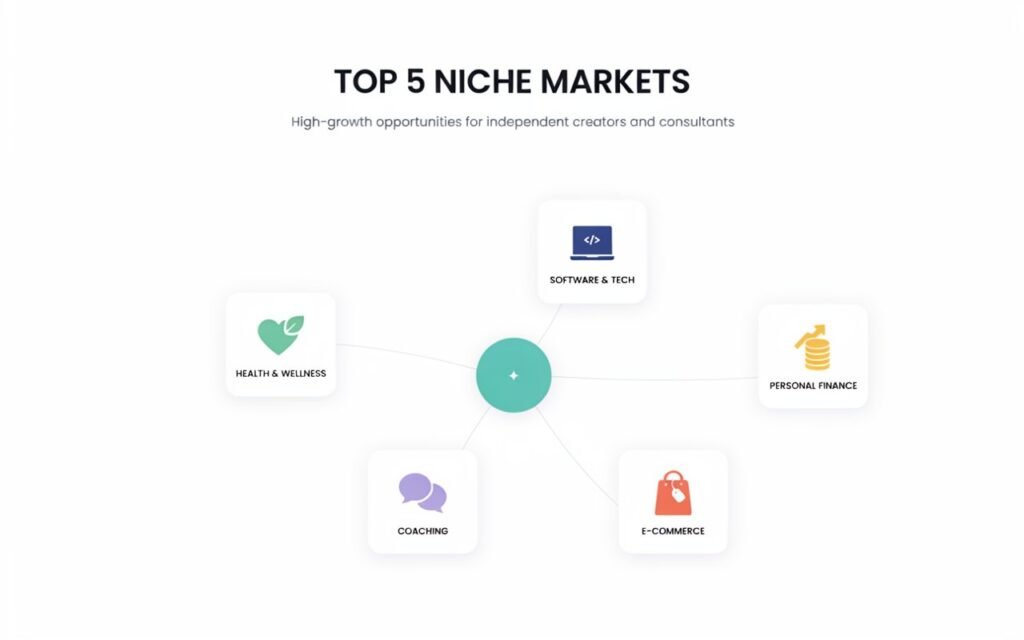
Trying to write for every industry slows growth. Select one or two areas where you already have knowledge or strong interest. Popular options include:
- Health and wellness
- Software and technology
- Personal finance
- E-commerce products
- Coaching and online education
A focused niche makes it easier to attract clients and charge higher rates later.
Step 3: Build a Simple Portfolio
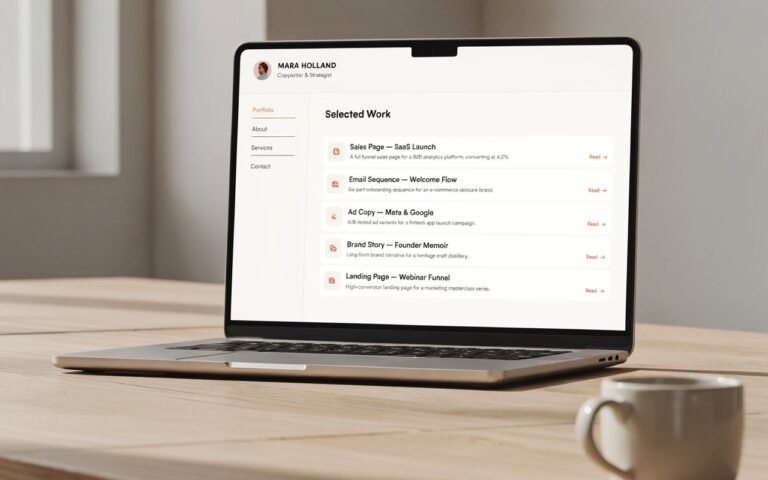
Clients want proof you can write. Create 4–6 strong samples even if you have never been paid. Options include:
- Spec work (imaginary projects for real brands)
- Rewriting weak existing pages
- Offering free or low-cost work to small local businesses in exchange for testimonials
- Writing sample emails, sales pages, or ad sets in your chosen niche
Present these samples on a simple one-page website or a clean PDF. Quality matters more than quantity.
Step 4: Set Your Rates and Offer
Start with project-based pricing rather than hourly rates. Early rates often fall between $50 and $300 per piece depending on length and complexity. As you collect results and testimonials, raise prices.
Create clear packages such as:
- Website homepage rewrite
- 5-email welcome sequence
- Product description set
- Facebook or Google ad copy pack
Clear offers make it easier for clients to say yes.
Step 5: Find Paying Clients

Use multiple channels at the same time:
| Method | Best For | Difficulty |
|---|---|---|
| Personal network | First clients | Easy |
| LinkedIn outreach | Consistent opportunities | Medium |
| Freelance platforms | Quick starts | Medium |
| Cold email to businesses | Higher-paying work | Higher |
| Content and social proof | Long-term inbound leads | Ongoing |
Tell everyone you know that you write copy. Reach out to small business owners, marketing managers, and agency contacts. On platforms, apply only to jobs that match your niche and samples. Direct outreach often produces better clients than waiting for job posts.
Step 6: Deliver Excellent Work and Collect Proof
Once hired, communicate clearly, meet deadlines, and focus on results. After completing a project, ask for a short testimonial and permission to use the work in your portfolio. Track any measurable outcomes the client shares, such as higher conversion rates or increased sales. Real results become your strongest marketing tool.
Step 7: Grow Into Higher-Paying Work
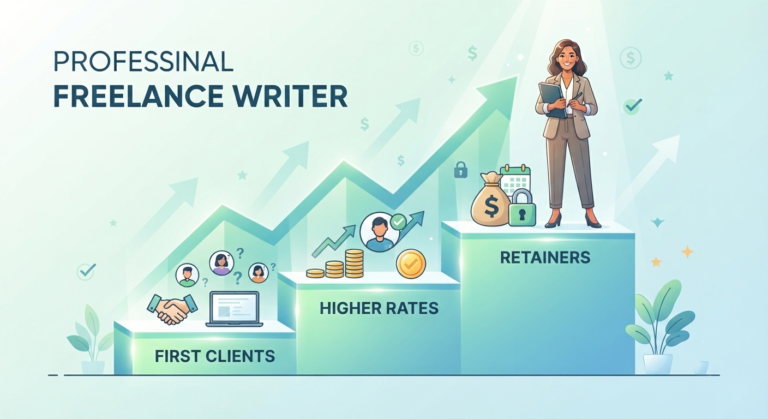
After 5–10 completed projects, raise your rates and become more selective. Specialize further, create case studies, and build relationships that lead to retainers or referrals. Many freelance copywriters move from project work to monthly retainers once they prove consistent value.
Common Mistakes to Avoid
- Waiting until you feel “ready” before seeking clients
- Charging too low for too long
- Accepting every type of writing request
- Neglecting to collect testimonials and results
- Relying on only one source of clients
Realistic Timeline
Most people who practice consistently and outreach regularly land their first paid project within 30–90 days. Building a stable income often takes 6–12 months of focused effort. Progress depends on daily practice, consistent client outreach, and continuous improvement.
Advice
Becoming a freelance copywriter and getting paid to write is a skill-based path anyone can follow. Learn the craft, create proof of your ability, reach out to potential clients, and improve with every project. The writers who succeed treat it like a business: they practice daily, protect their time, and focus on delivering measurable results for the people who hire them.
Start today with one small action, write a sample, rewrite an existing page, or send your first outreach message. Consistent steps turn the goal of getting paid to write into reality.