
A small blog can still get noticed in AI search.
You don’t need 100,000 pages or a giant publishing team. You need pages that answer specific questions well, give readers something useful, and make it easy for search systems to understand what your site is about.
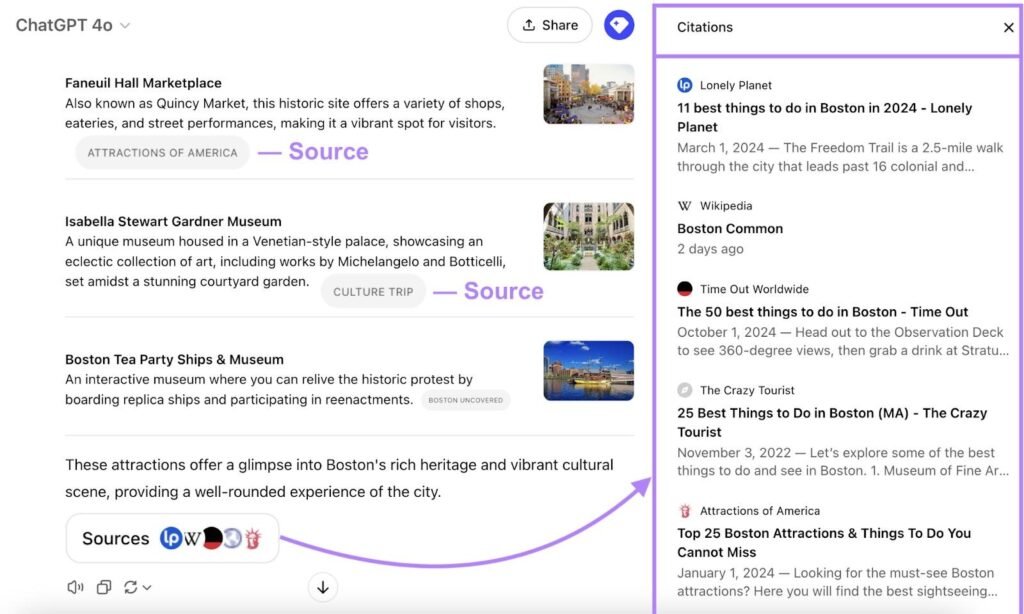
Google’s current guidance for AI Overviews and AI Mode still points site owners toward normal SEO fundamentals, while also encouraging original, non-commodity content.
ChatGPT follows a similar basic idea. Public websites can appear in ChatGPT search, but OpenAI says placement isn’t guaranteed and recommends allowing OAI-SearchBot to crawl your website.
So where does a small blogger fit?
Pretty well, if you pick your battles.
Here are 10 steps how small bloggers can compete with big sites.
1. Go after narrow questions
Big websites have huge topic coverage.
You probably can’t compete with them on a broad query like:
SEO
But you can build a strong page around:
How to do keyword research for a new WordPress blog
That’s a much clearer question.
The narrower the topic, the easier it becomes to show that your page actually answers it.
For example, a small SEO blog could create pages around:
- How to find keywords for a new blog
- How many keywords should one blog post target?
- How to find low-competition keywords without paid tools
- How to write SEO titles for WordPress
- How to fix orphan pages in WordPress
- How to check if Google indexed a new blog post
These topics have a clear purpose.
And they give you room to explain something properly.
Pick questions you can answer from experience
This is where a small blog can have an edge.
You might not have the publishing budget of a major SEO site, but you can document exactly what you did.
For example:
I checked 40 old posts in Search Console and found that 11 had impressions but almost no clicks. I rewrote their titles and introductions first, then monitored the pages again.
That’s useful.
A generic paragraph about “improving old content” doesn’t give the reader the same information.
2. Build around one clear topic at a time
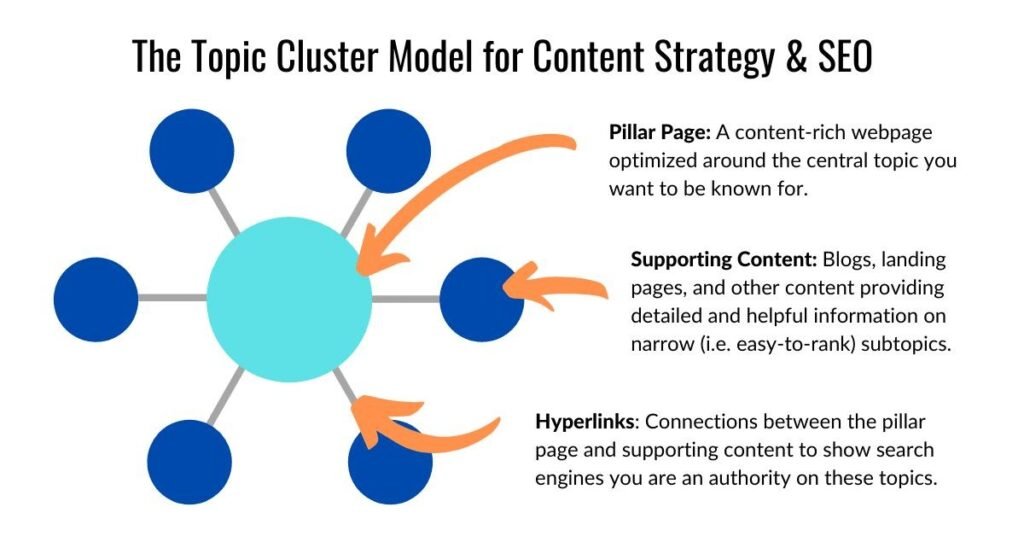
A small website gets stronger when its pages support each other.
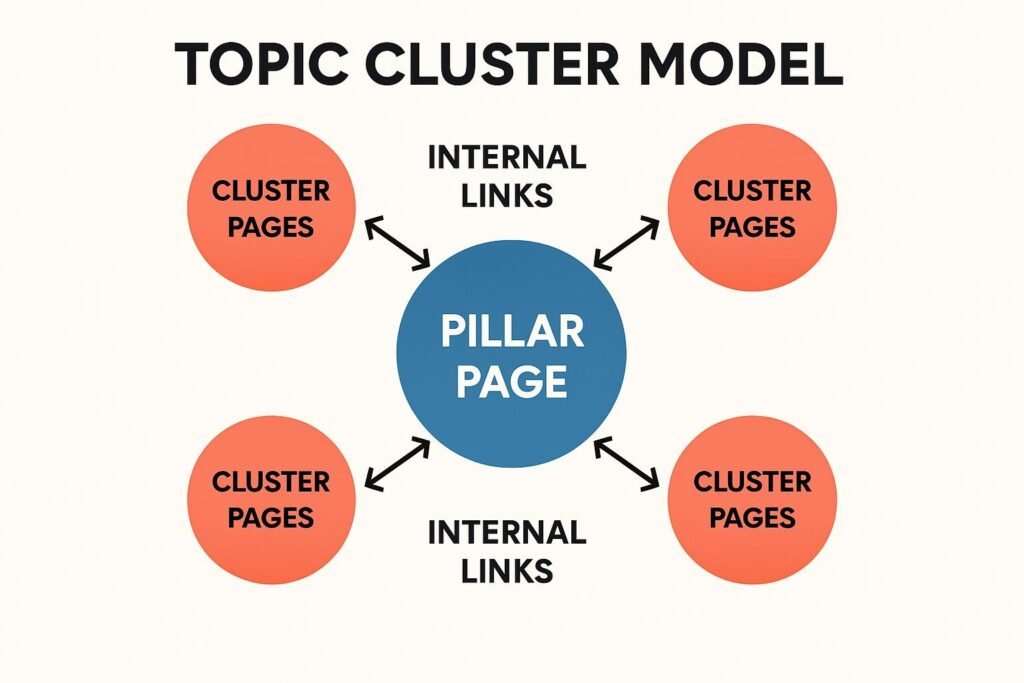
Suppose your main subject is WordPress SEO.
You could build a small content group like this:
Main guide:
WordPress SEO guide for beginners
Supporting pages:
- WordPress SEO settings
- Keyword research for WordPress
- WordPress internal linking
- WordPress schema markup
- WordPress image SEO
- WordPress technical SEO
- Best SEO plugins for WordPress
Then link the pages together where the connection is useful.
Your internal links give readers somewhere relevant to go next. They also help search systems understand the relationships between your pages.
Google’s search documentation continues to recommend standard SEO practices for its AI search features. There isn’t a separate magic set of rules that replaces the basics.
3. Put real experience into your articles
This is probably your strongest weapon as a small blogger.
Write about what you actually tested.
If you reviewed 3 WordPress SEO plugins, explain how you tested them.
If you changed a site’s internal links, show what you changed.
If you ran a keyword research process, show the steps.
Screenshots help too.
For example, instead of writing:
Internal links can improve website navigation.
Write:
I found 7 older posts that had no internal links pointing to them. I added links from 4 related articles and created a simple hub page for the topic.
Now the reader has something concrete.
You can even include a screenshot from Search Console, WordPress, Ahrefs, Semrush, or whichever tool you actually used.
The details make the article feel like someone’s work rather than a rewritten definition.
4. Answer the question before explaining everything else
AI answers often need a short passage that directly addresses the user’s question.
Give them one.
Suppose your article targets:
How many internal links should a blog post have?
Start with a useful answer:
There isn’t a fixed number. Add internal links when another page genuinely helps the reader understand the current topic. A 1,500-word article might need 3 relevant links, while a longer guide could reasonably have more.
Then explain how to choose the links.
This structure also works for human readers.
Someone landing on the page gets the answer quickly. They can then keep reading for examples and details.
Use clear headings for the questions people actually ask.
5. Become known for a small subject
A small blog has limited publishing time.
Use it carefully.
If your site covers SEO, WordPress, AI search, content optimization, and digital marketing, you still need boundaries.
Pick a few areas where you can publish repeatedly.
For example:
WordPress SEO
You could publish:
- WordPress SEO basics
- WordPress keyword research
- WordPress technical SEO
- WordPress redirects
- WordPress schema
- WordPress internal linking
- WordPress SEO plugins
- WordPress content audits
After 20 or 30 useful articles, you’ve created a much clearer subject footprint than a site that publishes one SEO article, one travel article, one finance article, and one recipe.
The individual pages matter.
So does the relationship between them.
6. Make your content easy to quote
Think about how a reader would pull one useful sentence from your article.
If every paragraph is vague, that’s difficult.
Write clear statements.
Instead of:
There are many factors that can affect the performance of a blog post.
Try:
A blog post can lose traffic when its information becomes outdated, search intent changes, or competing pages answer the query better.
The second sentence gives a complete idea.
Use short definitions when you introduce a technical term.
For example:
An orphan page is a page with no internal links pointing to it from other pages on your site.
Then explain how to find orphan pages.
Tables can help when you’re comparing tools. Lists work well for processes. Screenshots help when you’re showing a WordPress setting.
The format should match the information.
7. Make your site easy for AI crawlers to access
Your content can’t be discovered if important crawlers can’t access it.
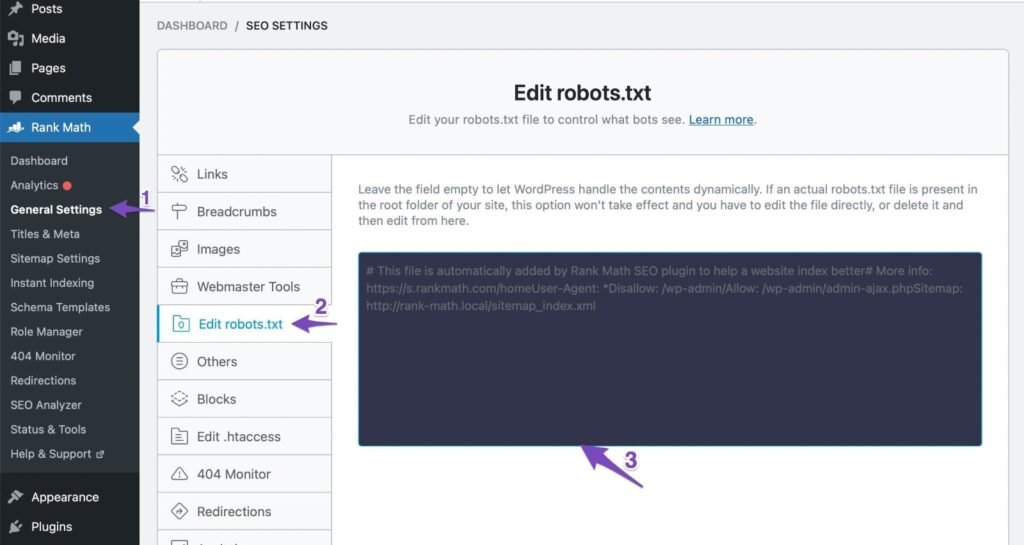
For ChatGPT search, OpenAI says website owners should allow OAI-SearchBot to crawl their sites and make sure their hosting or CDN permits traffic from OpenAI’s published searchbot IP addresses. OpenAI also says search placement depends on multiple factors and isn’t guaranteed.
Check your:
robots.txt- WordPress visibility settings
- SEO plugin settings
- firewall
- CDN
- bot protection
- server response codes
A simple robots.txt file might look like this:
User-agent: *
Disallow:

Sitemap: https://example.com/sitemap_index.xml
Don’t copy this blindly into your site.
Your existing robots.txt may contain rules for private areas, plugins, feeds, or other resources.
Check it first.
Google also needs to crawl and index your pages for them to appear in Search features. Google provides URL Inspection in Search Console for checking how Google accesses a URL.
ChatGPT can search the web and include links to relevant sources in its answers. OpenAI explains how this works in its ChatGPT Search documentation, including how websites can become eligible for inclusion.
Small blogs can compete through specificity
A big site can publish hundreds of articles every month.
You can still beat it on a specific question.
Imagine two articles:
Article A
SEO is important for businesses. There are many ways to improve your website and attract more visitors.
Article B
I found 23 pages on a small WordPress site that were receiving impressions but almost no clicks. Here’s how I checked each URL, grouped the pages by search intent, and decided which ones needed a new title.
Article B gives the reader something to work with.
That’s the standard to aim for.
Give people details they can use.
What AI search systems need from your website
You can’t control which page an AI system chooses.
You can control what you publish.
A strong page usually has:
- A clear subject
- A direct answer
- Specific examples
- Useful supporting details
- Accurate facts
- Good internal links
- A crawlable URL
- Clear headings
- Original information where possible
- Sources for claims that need verification
Google’s current documentation says its generative AI search features can use web sources and that existing SEO practices remain relevant. Google also recommends providing content that adds something beyond information already available everywhere.
That last point matters for small blogs.
If your article simply repeats information that appears on 50 other websites, there is little reason for anyone to choose your page.
Add your own testing.
Add screenshots.
Add examples from real projects.
Explain the part that other articles skip.
What small bloggers should stop worrying about
You don’t need to chase every new AI SEO acronym.
Google’s current documentation has specifically addressed common misconceptions around AEO and GEO while continuing to point site owners toward established SEO practices.
You also don’t need an enormous publishing schedule.
A site with 30 strong articles on a focused subject can be much easier to understand than a site with 300 thin articles covering everything.
And you don’t need to guess what an AI system wants to read.
Write for the question.
Then make the answer easy to find.
A simple 7-step workflow
Use this process for your next article.
Step 1: Pick one specific question.
Step 2: Search Google and ChatGPT to see what answers already exist.
Step 3: Find the parts of those answers that are vague, outdated, or incomplete.
Step 4: Add your own examples, testing, screenshots, or experience.
Step 5: Put the direct answer near the top.
Step 6: Link to 2 to 5 relevant pages on your own site.
Step 7: Check crawling, indexing, titles, headings, and factual accuracy before publishing.
Then leave the page alone long enough to collect useful data.
You can review its performance later in Search Console and decide whether the content needs changes.
FAQs
Can a small blog appear in ChatGPT answers?
Yes. OpenAI says any public website can appear in ChatGPT search, provided it can be discovered and crawled. OpenAI recommends allowing OAI-SearchBot, but it doesn’t guarantee a particular placement.
Do small websites have a chance in AI search?
Yes, a small site can appear when its content is relevant to a user’s query. The practical focus should be specific topics, useful information, crawlability, and original material.
Should small bloggers write more articles?
Publishing more can help when the articles are useful and connected to the site’s subject. A higher article count alone doesn’t guarantee visibility.
Does domain authority matter for AI answers?
Authority can be one factor in how search systems evaluate sources, but there isn’t a public formula that tells you exactly how much any single authority metric affects ChatGPT or Google AI results.
Focus on the things you can control: useful content, accurate information, technical accessibility, internal linking, and clear subject coverage.
Should I optimize separately for ChatGPT and Google?
You can create content that works for both.
Google’s current guidance says existing SEO practices remain relevant for its generative AI search features. OpenAI likewise provides normal crawl-access guidance for websites appearing in ChatGPT search.
How long should an article be for AI search?
There isn’t a required word count.
Write enough to answer the question properly. A focused 800-word guide can be more useful than a 3,000-word article padded with repeated explanations.
Should I use AI to write my blog posts?
You can use AI for research, outlining, editing, or other parts of your workflow, but the finished page should contain accurate information and give readers a reason to visit your site.
Google’s guidance focuses on the quality and usefulness of the resulting content rather than simply whether AI was involved in producing it.