
AI optimisation is the process of improving your website and content so AI-powered search tools can find, understand, and use your information when answering users’ questions.
Think about how people search online today. Someone might type a question into Google, ask ChatGPT for a product recommendation, or use Perplexity to research a topic.
These tools use artificial intelligence to understand questions and generate answers from information available across the web.
And that’s where AI optimisation comes in.
When you optimise your website for AI search, you give AI systems clearer information about your content, your business, and the subjects you cover. This can improve your chances of being referenced in AI-generated answers.
For bloggers, website owners, freelancers, and small businesses, understanding AI optimisation is becoming an important part of managing online visibility.
What does AI optimisation mean?
The term AI optimisation can have different meanings depending on the industry.
In artificial intelligence development, it can refer to improving AI models, algorithms, or their performance. In SEO and digital marketing, however, it usually refers to preparing websites and online content for AI-powered search and answer platforms.
This guide focuses on the second meaning.
AI optimisation involves several activities:
- Making website content easy for AI systems to understand.
- Publishing accurate information that answers specific questions.
- Building topical authority through relevant, well-organised content.
- Making website pages accessible to search crawlers.
- Establishing credibility through original research, experience, and reliable references.
- Improving your chances of appearing as a cited source in AI-generated answers.
For example, suppose someone asks ChatGPT:
Which WordPress SEO plugins are suitable for beginners?
ChatGPT may retrieve information from several websites and use relevant sources to prepare its response. If your website contains a useful, accurate comparison of WordPress SEO plugins, it has an opportunity to appear as a cited source.
Your content needs to be accessible, relevant, and useful for that particular question.
How does AI optimisation work?
AI-powered search systems use different technologies to retrieve information, interpret questions, and generate answers.
One technique used in this process is called Retrieval-Augmented Generation (RAG).
RAG allows an AI system to retrieve relevant information from external sources before generating a response. This helps connect the answer to information that can be checked against available sources.
Here’s a simplified explanation of the process:
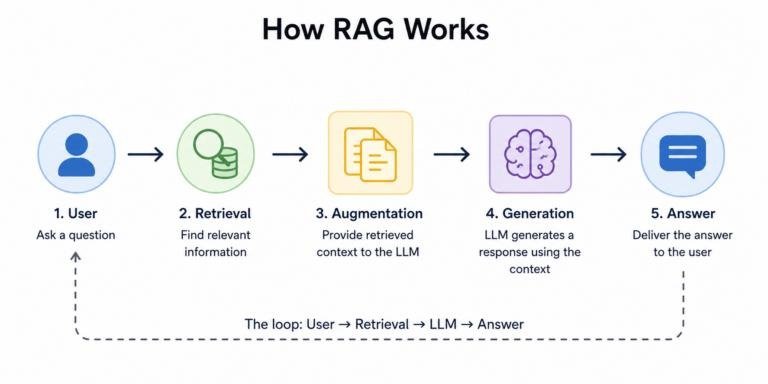
- User asks a question: Someone enters a question into an AI search platform.
- Information retrieval: The system searches for relevant information from accessible sources.
- Content interpretation: The system processes the retrieved information and identifies material related to the question.
- Answer generation: The AI generates a response using the information it considers relevant.
- Source references: Depending on the platform and response, the system may display links or citations to supporting websites.
The exact process differs between platforms. ChatGPT Search, Google AI Overviews, and Microsoft Copilot don’t necessarily retrieve or evaluate information in the same way.
Google has confirmed that its generative search features use its existing Search systems to retrieve relevant information. Its official guide to AI features in Google Search explains the relationship between traditional SEO and AI-generated search experiences.
Table of Contents
AI optimisation vs traditional SEO
Traditional SEO focuses on improving a website’s visibility in search engine results pages (SERPs).
AI optimisation focuses on helping AI-powered platforms discover, understand, and reference website information in generated answers.
Both approaches share many practices, including useful content, technical accessibility, internal linking, and clear website structure.
Here’s how they compare:
| Traditional SEO | AI optimisation |
|---|---|
| Targets search engine results | Targets AI-generated answers |
| Focuses on organic rankings | Focuses on AI visibility and citations |
| Uses keywords and search intent | Uses questions, context, and relevant information |
| Builds search visibility through relevant pages | Helps AI systems identify useful sources |
| Tracks rankings and organic clicks | Tracks citations and AI referral traffic |
| Uses technical SEO and content quality | Also relies on technical SEO and content quality |
Example:
Imagine you publish a blog post titled “Best WordPress SEO Plugins for Beginners.“
With traditional SEO, you might target the keyword best WordPress SEO plugins and try to rank your page on Google.
With AI optimisation, you would also make sure the article contains clear plugin descriptions, practical comparisons, relevant features, and answers to questions beginners ask.
Your goal is to make the page useful for readers and understandable to AI-powered search systems.
Why is AI optimisation important for websites?
People now use AI platforms to research products, compare services, learn new skills, and find answers to everyday questions.
This creates another way for websites to reach potential readers.
Consider a small business that publishes helpful articles about WordPress website management. Its content might attract visitors through Google, while relevant articles could also be referenced in answers generated by ChatGPT or other AI platforms.
Here are 4 reasons website owners should pay attention to AI optimisation.
1. More opportunities to reach online audiences
AI-powered search gives users another way to discover information.
A website can receive exposure when its content appears as a supporting source in an AI-generated answer.
For example, a website that publishes detailed information about technical SEO might be referenced when someone asks an AI assistant how to fix indexing problems.
2. Increased brand visibility
When an AI platform cites your website, users can see your brand alongside the information in its answer.
Repeated references to your website across relevant questions can help more people become familiar with your business.
However, a citation doesn’t guarantee that someone will visit your website or become a customer.
3. Better content organisation
Preparing content for AI search encourages website owners to review how their information is written and organised.
Clear headings, descriptive page titles, accurate explanations, and relevant internal links make content easier for visitors to navigate.
These practices also support search engine understanding.
4. Opportunities to build topical authority
Publishing useful content around a specific subject helps establish what your website covers.
For example, a website focused on SEO might publish articles about:
- Keyword research
- On-page SEO
- Technical SEO
- WordPress SEO
- Schema markup
- AI search
When these articles cover related questions and link to each other naturally, they give readers and search systems a clearer picture of the website’s subject matter.
How to optimise your website for AI search

You can start preparing your website for AI search using practices that already support good SEO.
You don’t need advanced programming skills to make many of these improvements. If you use WordPress, most content-related changes can be made through the dashboard and block editor.
1. Create helpful and original content
Content quality should be your first priority.
AI systems can retrieve information from many websites. Pages that simply repeat common information have little distinctive information to contribute.
Give readers something useful through:
- First-hand experience with products or tools.
- Original examples and screenshots.
- Practical instructions.
- Accurate comparisons.
- Specific answers to common questions.
- Relevant statistics supported by reliable sources.
For example, if you’re writing about WordPress SEO plugins, explain how a beginner can configure a plugin and which settings they should check.
You could include screenshots of the actual WordPress dashboard to help readers follow the process.
Google’s people-first content guidance recommends publishing original, reliable information that provides a satisfying experience for readers.
2. Answer specific questions directly
AI-powered search tools frequently respond to questions written in natural language.
Your content should address the questions your target audience actually asks.
For example, an article about keyword research could answer:
- What is keyword research?
- How do beginners find keywords?
- What is search intent?
- How do you choose a focus keyword?
- Which free keyword research tools can you use?
Give a direct answer near the beginning of each relevant section.
Then explain the topic with examples and practical details.
This structure helps readers find information quickly and makes the purpose of each section clear.
3. Use clear headings and content structure
Your website articles should have a logical heading structure.
Use:
- H1 for the main article title.
- H2 for major sections.
- H3 for supporting topics.
- Bullet points for instructions and lists.
- Tables for comparisons where appropriate.
Avoid using headings simply to insert additional keywords.
For example, an article about AI search could use this structure:
H1: What Is AI Optimisation?
H2: What does AI optimisation mean?
H2: How does AI optimisation work?
H3: What is retrieval-augmented generation?
H3: How does AI retrieve website information?
H2: AI optimisation vs traditional SEO
H2: How to optimise your website for AI search
H2: Frequently asked questions
A well-organised article makes it easier for visitors to locate the information they need.
4. Improve your website’s technical SEO
AI search systems need access to website information to retrieve and use it.
Technical SEO helps search engines discover and process your pages.
Check the following areas:
Website indexing: Make sure important pages can be crawled and indexed by search engines.
Robots.txt: Review your robots.txt file to ensure you’re not accidentally blocking search crawlers.
XML sitemap: Submit your sitemap through Google Search Console and keep it updated.
Mobile usability: Make sure your website works properly on smartphones and tablets.
Page speed: Reduce unnecessary scripts, compress large images, and use reliable hosting.
Internal links: Link related articles together so visitors and crawlers can discover your content.
For WordPress websites, you can use plugins such as Yoast SEO or Rank Math to manage several basic SEO settings.
Technical accessibility also matters for AI search. Google’s official documentation explains that pages need to meet its existing Search eligibility requirements to appear as supporting links in AI Overviews and AI Mode.
5. Allow relevant AI crawlers to access your website
Different AI services use different crawlers to discover website information.
For example, OpenAI uses separate crawlers for search discovery and model training.
Two user agents worth knowing about are:
| Crawler | Purpose |
|---|---|
| OAI-SearchBot | Used to discover websites for ChatGPT Search |
| GPTBot | Used for crawling content that may be used to train OpenAI’s generative AI foundation models |
If you want your public website content to be discoverable for ChatGPT Search, check that your robots.txt file doesn’t block OAI-SearchBot.
A basic example of allowing it is:
User-agent: OAI-SearchBot
Allow: /
You can also control GPTBot separately.
These settings have different purposes. Allowing OAI-SearchBot doesn’t automatically mean you’ve allowed GPTBot.
OpenAI explains these controls in its official crawler documentation.
WordPress tip: If you’re unfamiliar with robots.txt, ask your hosting provider or SEO professional to review the file before making changes. An incorrect rule can block important crawlers.
6. Use structured data where relevant
Structured data helps search engines understand specific information on a webpage.
It uses a standard format, commonly JSON-LD, to describe information such as:
- Articles
- Products
- Organisations
- Local businesses
- Breadcrumb navigation
- Events
For example, Article schema can identify the headline, author, publication date, and other details about a blog post.
WordPress SEO plugins such as Rank Math and Yoast SEO can generate supported schema markup through their settings.
Make sure your structured data accurately reflects information visible on the page.
Google has stated that website owners don’t need special schema markup to appear in AI Overviews or AI Mode. Existing structured data practices can still help search engines understand your content.
7. Build trust and demonstrate experience
Trust matters when people use your website to make decisions.
Your content should give readers a reason to believe the information comes from a reliable source.
You can work on this by:
- Adding an author name and biography.
- Linking to reliable sources when making factual claims.
- Publishing original tutorials and reviews.
- Keeping business information accurate.
- Updating articles when features or instructions change.
- Explaining how you tested a product or tool.
For example, if you review an SEO plugin, include screenshots of its actual settings and explain which features you tested.
Avoid publishing product claims you can’t verify.
8. Build relevant backlinks and brand mentions
Backlinks are links from other websites pointing to your website.
They can help search engines discover pages and provide context about your website’s reputation.
You can earn relevant backlinks through:
- Guest contributions to relevant websites.
- Original research and useful resources.
- Genuine industry partnerships.
- Expert contributions to publications.
- Useful tutorials that other website owners reference.
Brand mentions can also help people discover your business across the web.
However, there is no guaranteed number of backlinks or brand mentions that will make an AI platform cite your website. Focus on genuine references from relevant sources.
9. Monitor your AI search visibility
You need to check whether your website is appearing in AI-generated answers.
Start with these tools:
Google Search Console
Check indexing, search performance, queries, and organic clicks. Google also provides a Generative AI performance report where available.Visit Google Search Console
Bing Webmaster Tools
Its AI Performance report shows citation activity across supported Microsoft AI experiences, including Copilot.Visit Bing Webmaster Tools
Google Analytics 4
Use referral traffic reports to investigate visits coming from AI platforms. Traffic reporting won’t capture every AI exposure or citation.Visit Google Analytics
You can also manually test relevant questions in ChatGPT, Perplexity, and Google AI search experiences.
For example, search for questions related to your website’s main topics and check whether your pages appear as references.
Remember that AI answers can vary between searches, so a single test doesn’t establish consistent visibility.
Common AI optimisation mistakes to avoid
Many website owners are experimenting with AI search, but some practices are based on assumptions rather than confirmed guidance.
Watch out for these mistakes.
Publishing large amounts of AI-generated content
AI writing tools can help with research, outlines, and editing. However, publishing large numbers of articles without original information can leave your website full of repetitive content.
Review AI-assisted articles carefully. Add examples, personal experience, screenshots, and accurate references before publishing.
Google’s guidance focuses on the usefulness and purpose of content, regardless of whether AI was involved in its creation. Google for Developers+1
Adding unnecessary keywords
Repeating phrases such as AI SEO, AI optimisation, and ChatGPT SEO throughout an article doesn’t make the content more useful.
Use relevant terms where they naturally explain the subject.
Blocking AI search crawlers
You might accidentally block a crawler through robots.txt or a security plugin.
Check your crawler settings before assuming your website is available to AI search platforms.
Adding llms.txt without understanding its purpose
You might have seen recommendations to create an llms.txt file for your website.
Some services may use this type of file to access information about a website. However, Google has explicitly stated that it doesn’t use llms.txt as a special requirement or ranking signal for its AI search features.
You can read Google’s official AI optimisation guidance for clarification. Google for Developers
Expecting immediate AI citations
Publishing an article doesn’t guarantee that ChatGPT, Google, or another AI platform will reference it.
AI-generated answers can change depending on the question, available sources, and retrieval systems.
Give your content time to be discovered, indexed, and evaluated.
Best AI optimisation tools for website owners
You can use several existing SEO and analytics tools to prepare your website for AI search.
Here are 5 worth knowing about.
1. Google Search Console
Monitor indexing, search queries, clicks, and impressions. Its available AI performance reporting can help you examine visibility in Google’s generative search features.Official website
2. Bing Webmaster Tools
Check website indexing and use its AI Performance report to review pages cited in supported AI-generated answers.Official website
3. Semrush
Research keywords, analyse competitors, and review organic search performance. Its AI visibility products can also help monitor brand presence in supported AI platforms.Official website
4. Ahrefs
Research backlinks, analyse keywords, examine competitors, and review content opportunities. AI visibility features are also available in its product range.Official website
5. Rank Math
A WordPress SEO plugin for managing titles, meta descriptions, sitemaps, and supported schema markup.Official website
You can begin with Google Search Console and Bing Webmaster Tools without purchasing an expensive AI visibility platform.
What is the future of AI optimisation?
AI-powered search is changing how people discover information online.
Google continues to develop AI Overviews and AI Mode, while ChatGPT and Microsoft Copilot provide conversational ways to search for information.
These developments create new opportunities for publishers and businesses to reach people through AI-generated answers.
For website owners, a few areas deserve attention:
- Conversational search: People increasingly ask detailed questions using natural language.
- AI-generated recommendations: AI platforms can help users compare products, services, and businesses.
- Source citations: Websites can receive references and links when their information is used in AI answers.
- Content credibility: Accurate information, original experience, and reliable sources give readers stronger reasons to trust a website.
- Technical accessibility: Search crawlers need access to relevant website content.
AI search technology will continue to change. Specific platform requirements and reporting features may also change over time.
The best approach is to maintain good SEO practices while monitoring how your website appears across the search platforms your audience uses.
Frequently asked questions about AI optimisation
1. What is AI optimisation in simple words?
AI optimisation is the process of improving digital content and systems so artificial intelligence can understand and use information effectively. In SEO, it usually refers to preparing website content for AI-powered search platforms such as ChatGPT, Google AI Overviews, and Microsoft Copilot.
2. Is AI optimisation the same as SEO?
AI optimisation and traditional SEO overlap, but they have different areas of focus. Traditional SEO targets visibility in search engine results, while AI search optimisation focuses on helping AI platforms retrieve, understand, and reference website content.
3. What is the difference between GEO and AEO?
GEO stands for Generative Engine Optimisation. It focuses on improving a brand’s visibility in answers generated by AI systems.
AEO stands for Answer Engine Optimisation. It focuses on making information easier for answer-focused platforms to retrieve and present.
Both terms are used in the broader field of AI search visibility, and their definitions can overlap.
4. Does ChatGPT use Google to find website information?
ChatGPT Search uses web search providers and its own search-related systems to retrieve information. OpenAI documents its own search crawler, OAI-SearchBot, which helps discover websites for ChatGPT Search.
You can read the OpenAI crawler documentation for details.
5. How can I get my website mentioned in ChatGPT?
Start by making sure your public website content is accessible to OAI-SearchBot. Publish useful, original articles, answer relevant questions, maintain accurate information, and build a website with clear internal linking.
There is no guaranteed method for getting a website cited in ChatGPT.
6. Does AI-generated content hurt SEO?
AI-generated content doesn’t automatically violate Google’s policies. Google evaluates content based on its quality, usefulness, and compliance with spam policies.
Publishing large amounts of unhelpful or repetitive content to manipulate search rankings can create problems, regardless of how that content was produced.
7. Do I need llms.txt for AI optimisation?
No. Google has confirmed that llms.txt isn’t required for inclusion in its AI search features. Other services may choose to use it, but website owners shouldn’t treat it as a guaranteed way to improve AI visibility.
8. How do I measure AI search visibility?
You can use Bing Webmaster Tools’ AI Performance report to review citations across supported Microsoft AI experiences. Google Search Console provides reporting for Google’s generative AI features where available.
You can also monitor referral traffic from AI platforms in Google Analytics 4 and manually check relevant questions.
9. Can small websites benefit from AI optimisation?
Yes. Small websites can publish useful, specialist content that answers specific questions in their niche. A small business blog with practical tutorials and original experience can become a relevant source for particular topics.
10. How long does AI optimisation take?
There is no fixed timeline. Discovery, crawling, indexing, and citation activity depend on the website, content, search platform, and competition. Monitor your website over time rather than expecting immediate results.
Conclusion
AI optimisation is becoming another part of website visibility and digital marketing.
If you run a blog or small business website, start by reviewing your existing content, checking technical accessibility, and answering the questions your audience actually asks.
Keep your information accurate, demonstrate real experience, and monitor your website across traditional search and AI platforms.
These practices give your website a sound foundation for both Google search and AI-powered discovery.