
If you run a small business and feel overwhelmed by SEO, here is the honest SEO advice I’d give any small business owner:
1. Focus on the basics that actually move the needle
2. Ignore most of the hype
3. Treat search as a long-term system rather than a quick fix.
Most small businesses do not need complex campaigns or expensive agencies at the start. They need clear priorities, consistent effort, and the discipline to measure what matters.
In this guide you will learn what works in practice, which tools are worth your time, how to structure pages that rank, and how to avoid the expensive mistakes I see repeatedly.
This is not theory. It comes from years of watching small businesses waste money on tactics that look impressive but deliver little, while others quietly grow by doing the simple things well.
Why Most Small Businesses Get SEO Wrong
The biggest problem is not a lack of information. It is too much of the wrong information. Owners hear they need hundreds of backlinks, daily content, or the latest AI Writing tool. They chase rankings without fixing the foundation.
Search engines reward websites that answer real questions clearly, load quickly, and earn trust over time.

A professional website is no longer optional. The importance of website for business is straightforward: it is often the first place customers check before they buy or call.
Why businesses need a professional website goes beyond looking polished. A poorly structured site leaks traffic, confuses visitors, and signals low credibility to both users and search engines. SEO friendly website design starts with clear navigation, readable text, mobile usability, and logical page hierarchy.
SEO friendly web design is not about fancy animations. It is about making information easy to find and easy to understand.
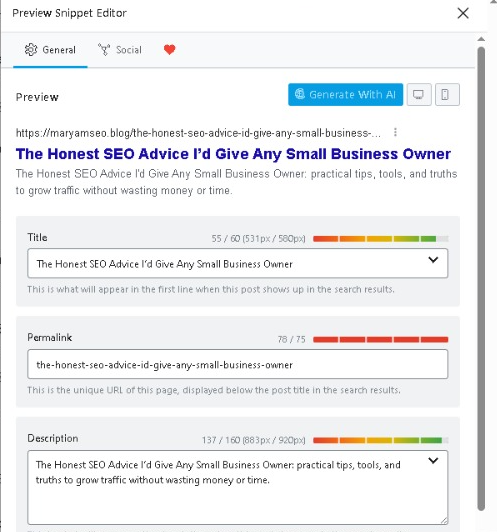
Many owners also underestimate title tags.
What is an SEO title?
It is the clickable headline that appears in search results. An SEO page title should accurately describe the page, include the main topic naturally, and stay under roughly 60 characters so it does not get cut off.
Do keywords matter in SEO?
Yes, but not in the old “stuff the page” way. Keywords help search engines understand relevance when they appear in titles, headings, and natural body text. They do not magically rank a weak page.
The Core SEO Tasks Every Small Business Should Prioritize
Here is the practical list of SEO tasks that deliver the highest return for limited time and budget:
- Fix technical basics: mobile-friendly layout, fast loading, secure HTTPS, and working internal links.
- Create clear, useful pages that match what people actually search for.
- Write title tags and meta descriptions that earn clicks.
- Build a simple content plan around customer questions.
- Track rankings and traffic so you know what is working.
- Earn a handful of relevant mentions or links over time instead of buying packages of low-quality links.
These tasks beat most advanced tactics for small sites. Product pages SEO and product page SEO deserve special attention if you sell online.
Each product page needs a unique title, clear description, relevant images with alt text, and structured data where possible. Thin or duplicated product pages rarely rank well.
Best Free and Affordable SEO Tools for Small Businesses
You do not need expensive platforms to start. The best free SEO tool for most small businesses is still Google Search Console. It shows how Google sees your site, which queries bring impressions, and where technical issues exist. Pair it with Google Analytics for traffic patterns.
Other practical options include:
| Tool Type | Recommendation | Why It Helps |
|---|---|---|
| Free core | Google Search Console + Analytics | Ranking data, performance, technical alerts |
| On-page | Free browser extensions or basic free versions of popular checkers | Title length, heading structure, basic audits |
| Keyword research | Free tiers of established tools or Google’s own suggestions | Understand search volume and related terms |
| Affordable paid | Lower-cost plans of established SEO software | Track rankings, competitor gaps, content ideas |
Best SEO tools for small businesses, SEO software for small business, and best SEO software for small businesses should be judged by usefulness, not feature lists. SEO tools to increase traffic only help if you act on the data.
Affordable SEO tools and cheap SEO tool options exist, but the cheapest tool that sits unused is still a waste. Small business search engine optimization tools work best when they answer specific questions: which pages are ranking, which queries are close, and where technical problems hide.
Real SEO Examples That Actually Work for Small Sites
Looking at best SEO examples and SEO marketing examples is more useful than abstract theory. A local service business that rewrote its service pages to answer specific customer questions, improved title tags, and added clear calls to action often sees steady ranking gains without buying links.
An ecommerce store that cleaned up product page SEO, added unique descriptions, and fixed site speed usually outperforms one that publishes endless blog posts on unrelated topics.
A perfect SEO page example usually contains:
- A clear title tag that matches the main topic
- An H1 that states the topic plainly
- Short introductory paragraph that answers the main question quickly
- Logical subheadings
- Practical details or steps
- Internal links to related pages
- Clean design that works on mobile
Examples of SEO success for small businesses almost always share the same traits: relevance, clarity, and consistency. SEO sample pages that rank tend to be the ones that solve a problem better than the competition, not the ones stuffed with keywords.
Understanding Backlinks, Nofollow, and Your Backlink Profile
Backlink ProfileIt is simply the collection of sites that link to yours. Quality matters far more than quantity. A few relevant links from trusted local or industry sites usually outweigh dozens of random directory links.
Nofollow links can still drive traffic and brand awareness. Search engines treat them differently from followed links for ranking signals, but a natural mix of link types is normal. Obsessing over link attributes is less important than earning mentions from real sources.
Tracking Progress Without Getting Lost in Data
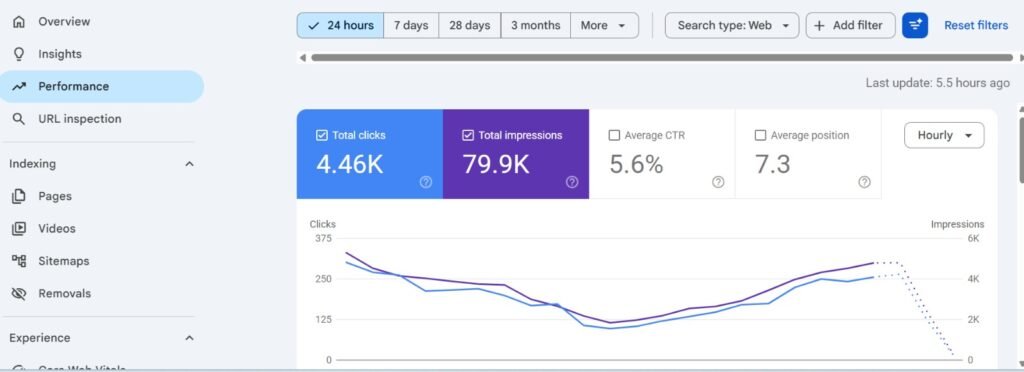
SEO analytics reporting should stay simple. Report search engine ranking for your most important pages and queries. Search ranking reports do not need to be weekly for every keyword. A basic SEO ranking dashboard that shows impressions, clicks, average position, and a handful of priority keywords is enough for most small businesses. Look at trends over months, not day-to-day noise.
SEO terminology and SEO abbreviations can feel overwhelming at first. You only need a working understanding of the basics: title tags, meta descriptions, rankings, organic traffic, and backlinks. The rest can be learned as needed.
Is SEO Worth It for Small Businesses?
Yes, when done with realistic expectations. SEO compounds. Early results often take months, not weeks. The businesses that benefit most treat it as an ongoing system rather than a one-time project. Those that expect overnight ranking miracles usually quit too soon or spend money on the wrong tactics.
The honest SEO advice I’d give any small business owner is to start small, measure what happens, and expand only what works. Combine solid technical foundations, useful content, and patient tracking. That combination outperforms most complicated strategies I have seen fail.
The honest SEO advice I’d give any small business owner remains the same whether you are just starting or have been trying for years:
Do the fundamentals consistently.
Ignore the noise.
Let results compound.
Start with your website structure and title tags this week. Review Search Console data next week. Build from there. If you need deeper help on a specific part of the process, look for practical guides on technical SEO or content structure that match your current stage.
What is the best advice for SEO?
Focus on making your website genuinely useful for the people searching, keep technical issues under control, and measure results over months rather than days.
What are some helpful advice for small business owners?
Prioritize a professional, SEO friendly website, write clear pages that answer real questions, use free tools like Search Console first, and avoid buying low-quality links or content packages.
What are some SEO tips for small businesses?
Optimize title tags, improve product or service pages, track rankings simply, earn a few relevant mentions, and publish only content that serves customers.
Is SEO worth it for small businesses?
It is worth it when treated as a long-term investment in visibility and credibility rather than a short-term traffic hack.
Do keywords matter in SEO?
Yes. They help search engines and users understand page topics, but they work best when used naturally in titles, headings, and helpful content.
Focusing heavily on the basics is the way to go because these do not change. Excellent guidance here my friend. Create truly helpful blog posts. Position yourself to rank on page one.
Thank you my friend.
Means a lot. Yes, the basics never go out of style.
I’ll keep creating helpful posts and working towards that page-one ranking.
Appreciate you taking the time to comment.