
Organic traffic still matters in 2026. But the way people find websites has changed.
Google search is only one part of the picture now. People discover content through AI search tools, Reddit discussions, YouTube, Pinterest, newsletters, social platforms, and even search results that answer the question before someone clicks a website.
That gives you more places to attract visitors.
Here are 15 practical ways to build organic traffic in 2026.
1. Build content around real search journeys
Most keyword research starts with individual keywords.
Try looking at the entire journey instead.
Someone searching for “SEO audit” might later search for:
- SEO audit checklist
- technical SEO audit
- how to audit a WordPress site
- free SEO audit tools
- SEO audit report template
- how to fix SEO issues
These searches belong to the same topic.
Create a useful content cluster around them and connect the pages with internal links. One article can bring the visitor in, while the supporting pages answer the next questions they have.
2. Target low-competition long-tail searches
Big keywords can take months to compete for.
Long-tail searches give smaller websites more room.
Instead of targeting “SEO,” you could target something like “SEO automation tools for WordPress” or “how to automate WordPress SEO tasks.”
The traffic volume might be smaller.
But the search intent is much clearer.
A person typing a specific query usually knows what they’re trying to solve. That makes these searches especially useful for blogs, service pages, and digital products.
3. Create content that AI search systems can understand
AI search has changed how content gets discovered.
Tools such as ChatGPT, Google AI Overviews, and other AI-powered search systems can pull information from web pages when answering user questions.
Write clear answers.
Use descriptive headings. Define important terms. Give examples. Keep related information close together instead of spreading one answer across 5 different sections.
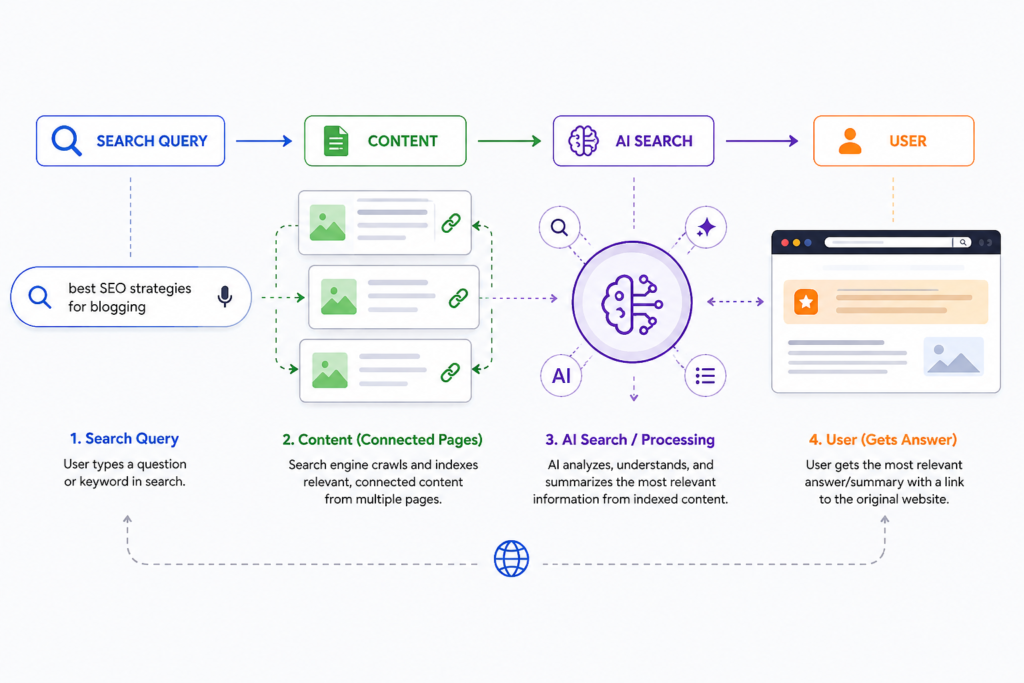
A page that clearly answers “How do I fix a 404 error in WordPress?” gives both readers and search systems something concrete to work with.
4. Turn one article into multiple traffic sources
You don’t have to create completely new content every day.
Take one strong article and break it into smaller assets.
For example, a 2,000-word SEO article can become:
- 3 Pinterest pins
- 5 LinkedIn posts
- 5 short social posts
- 1 email newsletter
- 1 Medium adaptation
- 1 short YouTube video
- several Reddit discussion points
Each format can reach a different audience.
And each one can send people back to the original article when the context makes sense.
5. Find questions people ask outside Google
Google isn’t the only place where people reveal what they need help with.
Check Reddit, Quora, YouTube comments, Facebook groups, niche forums, and community discussions.
Look for repeated questions.
If 10 people are asking how to recover traffic after a Google update, that’s a content idea.
If several WordPress users are confused about REST API errors, that’s another one.
The wording people use in these conversations can also help you understand search intent better than a keyword tool alone.
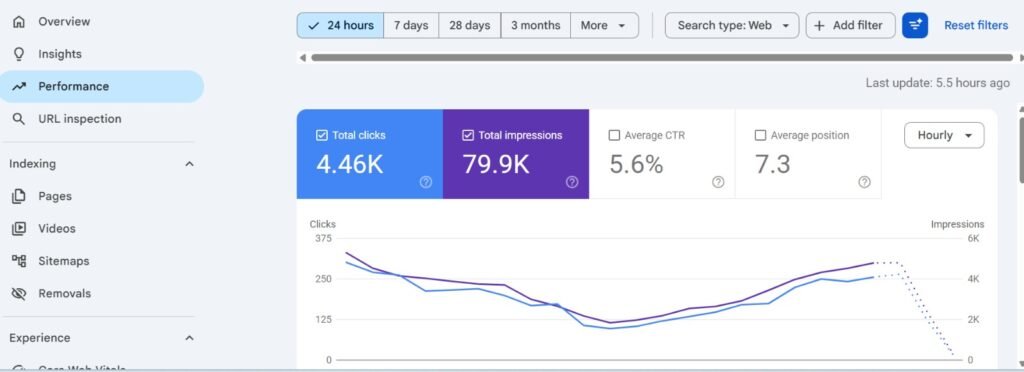
6. Update pages that already have impressions
Sometimes your easiest traffic opportunity is already sitting inside Google Search Console.
Open Performance → Search results and look for pages receiving impressions but very few clicks.
Then check the queries.
You might discover that a page ranking around positions 8–20 is already appearing for searches you didn’t target directly.
Improve the title.
Make the answer more specific.
Add missing sections.
Improve internal links.
Update outdated information.
A page that’s already getting impressions has a head start.
7. Build topical authority with supporting content
Publishing random articles across dozens of subjects makes it harder to build a clear site structure.
Pick a topic and go deeper.
For example, an SEO website could build a cluster around technical SEO:
Main topic: Technical SEO
Supporting pages:
- Technical SEO checklist
- Crawl budget
- XML sitemaps
- Robots.txt
- Canonical tags
- 404 errors
- Redirects
- Core Web Vitals
- WordPress technical SEO
Link these pages naturally.
Now your site has a clear relationship between the content.
8. Publish original data and small studies
Original information is difficult to copy.
You don’t need a huge research team.
You could analyze 100 websites in your niche, compare 50 SEO tools, survey 30 website owners, or collect results from your own experiments.
Then publish what you found.
For example:
“We Tested 20 WordPress SEO Plugins: Here’s What Happened.”
That’s much more interesting than another generic article titled “Best WordPress SEO Plugins.”
Original research can also attract backlinks when other writers reference your findings.
9. Answer comparison searches
People love comparisons because they’re usually close to making a decision.
Target searches such as:
- Ahrefs vs Semrush
- WordPress vs Shopify SEO
- SEO plugin A vs plugin B
- Canva vs Adobe Express
- free vs paid SEO tools
Don’t just create a feature table.
Test the products where possible. Explain who each option suits. Include limitations and real use cases.
That gives the page a reason to exist.
10. Use Pinterest for evergreen discovery
Pinterest can work well for topics that people save and revisit.
SEO checklists, blogging guides, templates, content planning tips, tutorials, and how-to articles can all work as visual content.
Create a dedicated pin for each useful article.
Use a clear headline on the pin, a readable design, and a description that matches the page.
Don’t publish the entire article on Pinterest.
Give people enough information to understand why the page is useful, then send them to the original article.
11. Build useful internal link paths
Internal links are easy to ignore because they don’t feel exciting.
They matter.
Imagine someone lands on your article about SEO copywriting.
You can naturally link them to:
- keyword research
- search intent
- content optimization
- title tag optimization
- content pruning
Now one visitor has several relevant next steps.
Review your older articles regularly and look for places where a relevant internal link would genuinely help.
12. Get mentioned where your audience already hangs out
You can generate organic visitors without waiting for Google rankings.
Find websites, newsletters, communities, podcasts, and publications that already reach your audience.
Then contribute something useful.
Write a guest article.
Provide a quote for a journalist.
Share original research.
Answer a relevant community question.
Appear on a podcast.
The goal is to get your expertise in front of people who already care about the topic.
13. Create free tools and templates
This is one of my favorite ways to attract organic traffic.
People search for things they can use immediately.
Think:
- SEO audit templates
- keyword research spreadsheets
- content calendars
- meta description generators
- blog brief templates
- Pinterest templates
- AI prompt libraries
- website checklists
A useful free resource can attract search traffic, backlinks, social shares, and email subscribers at the same time.
And if you sell digital products, the free resource can naturally introduce people to your paid products.
14. Refresh old content before publishing more
Publishing 50 new articles isn’t always the best use of your time.
Look at your existing content first.
Find pages that:
- have lost rankings
- contain outdated information
- have declining clicks
- target several similar keywords
- have weak internal links
- no longer fully answer the search intent
Update them.
Add current examples. Remove irrelevant sections. Improve the structure. Fix broken links.
Sometimes one well-updated article can recover more traffic than several brand-new posts.
15. Create content for zero-click searches
Some searches are answered directly in the search results.
That doesn’t mean you should ignore them.
Target questions where the searcher may still need more detail after getting the quick answer.
For example:
“What is a 301 redirect?”
Give the short definition immediately.
Then explain when to use it, how it affects SEO, how to implement it in WordPress, and common mistakes.
The quick answer satisfies the search.
The deeper information gives the visitor a reason to click.
Which organic traffic methods should you start with?
Don’t try all 15 at once.
Start with 3:
- Update pages already getting impressions
- Build content clusters around your strongest topic
- Repurpose your best articles across other discovery platforms
Once those are working, add original research, free resources, community participation, and AI-search-friendly content.
Organic traffic in 2026 comes from being discoverable in more places.
Google still matters.
But your content can also be discovered through AI answers, communities, social platforms, visual search, referrals, and people sharing useful resources with each other.
Build for those discovery paths, and your website has more chances to be found.
FAQs
How can I increase organic traffic in 2026?
You can increase organic traffic by targeting long-tail keywords, updating existing content, building topic clusters, improving internal links, creating original research, optimizing content for AI search, and promoting useful resources across relevant discovery platforms.
Is Google still important for organic traffic in 2026?
Yes. Google remains an important source of organic traffic, but it is no longer the only discovery channel. AI search, Reddit, Pinterest, YouTube, newsletters, communities, and referrals can also help people discover your content.
What is the fastest way to increase organic traffic?
One of the quickest opportunities is to improve pages that already receive Google Search Console impressions but have low click-through rates or rankings around positions 8–20.
Updating the title, improving search intent alignment, adding useful information, and strengthening internal links can help.
How does AI search affect organic traffic?
AI search changes how users discover information by providing direct answers and recommendations. Creating clear, well-structured content with descriptive headings, definitions, examples, and direct answers can make your information easier for AI-powered search systems to understand and use.